A Spirited Affair
Jane Lawson looks for cheer in the global spirits industry.
The problem with alcohol
Alcohol is no ordinary commodity. While for many of us it evokes pleasure and
sociability, the harm it causes is massive and pervasive.
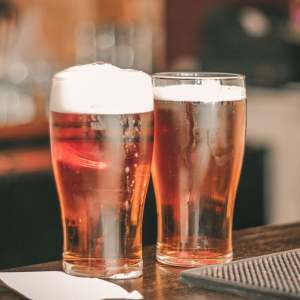
Beer is the third most popular drink in the world, after water and tea.(3)
In the UK consumers spend more than £30bn annually on alcohol, accounting
for an astonishing 5.8% of consumer expenditure.(4) Thats more than we
spend on personal goods and services or power and fuel.
While many of us enjoy alcohol without problems, beneath such levels of consumption
in the UK lie a 95% increase in alcoholic liver cirrhosis since 2000, according
to the Royal College of Physicians, and an 18% increase from 2002-2005 in alcohol-related
deaths. Alcohol consumption is responsible for 70% of peak A&E admittance.
And according to the National Institute for Clinical Excellence (NICE) about
one in four UK adults drinks too much and are damaging, or at least risking,
their health.
Regulating the industry
The drinks industry as a whole is closely involved in Government efforts to
reduce problem drinking. However not everyone agrees that this cosy arrangement
is without problems. In 2006 the Joseph Rowntree Foundation reported that, following
discussions with the industry, a 2005 Government standards document for the
production and sale of alcoholic drinks omitted any obvious mechanisms
of monitoring, implementation and enforcement...(1) According to the Foundation,
the industry was opposed to policies that seek to control overall levels
of alcohol consumption and rejected evidence linking levels of alcohol
consumption to levels of harm.
The alcohol industry spends £800m a year on advertising in the UK, 45
times more than the government spends educating people about the dangers of
alcohol. Promotion is restricted by a voluntary code of practice banning advertising
aimed at under-18s, encouragement of irresponsible drinking, and linking drinking
with social or sexual success or with masculinity or femininity.
However, the British Medical Journal accused the industry this year of pushing
the boundaries of the code, and of using market research on 15- and 16-year-olds
to guide their ad campaigns. Diageo brand Smirnoff Ice was reported to want
to become the most respected youth brand. In our Buyers Guides,
the Irresponsible Marketing column will help identify some companies criticised
in this respect.
A voluntary code of conduct is clearly not enough. According to evidence presented
by Professor Michael Marmot alcohol consumption among 11- to 15-year- olds rises
in line with increases in expenditure on alcohol advertising.(2)
Marmot attributes the increasing problems with alcohol consumption to the fall
in the relative price of alcohol (which relative to income has halved since
1960), the removal of restrictions on alcohol sales, and increased promotion
by the alcohol industry.
The latest advice from NICE about how to tackle problem drinking includes:
a possible ban on all alcohol advertising to protect children; a reduction in
alcohol licensing hours; and a minimum national price per unit of alcohol.
The Scottish government recently rejected a proposal on minimum pricing, as
has the UK Coalition government. The drinks industry claimed it would unfairly
target the poorest families. The Institute of Fiscal Studies (IFS) calculated
a 45p minimum unit price (as suggested in Scotland) would cut consumption of
shop-bought drinks by almost 25% in households with incomes below £10,000.
But only 12% for those with incomes over £60,000.
And minimum pricing, warned the IFS, would hand millions to retailers while
reducing tax revenue. The social costof alcohol in the UK, in ill
health, crime, and social problems has been estimated at £20bn annually
while alcohol taxes provided £13.26bn.(13)
With alcohol consumption as old as civilisation itself we clearly cant
lay all of its associated harms at the door of industry. But nevertheless, society
as a whole is arguably subsidising the harm associated with a highly profitable
industry.
References: 1 Alcohol strategy and the drinks industry: a partnership
for preventions? Rob Baggott, Joseph Rowntree Foundation, December 2006. 2
How Can We Reduce The Burden? Michael Marmot, Presentation at the Royal College
of Physicians, 13 November 2007. 3 The Institute of Alcohol Studies study
2008; revenue figures for 2004.
Theyd like to teach the world to drink...
As well as catering for the Western consumer most companies are merrily exploiting
new markets in developing countries, especially China where both the economy
and sales of alcohol continue to grow. Rémy Cointreaus 2009 Annual
Report describes, Formidable growth in new countries, especially Asia,
which now accounts for over 50% of the cognac market. China has become Rémy
Martins leading market, while the company even describes Vietnam as a
market with great potential. Bacardi sees the development of the Dewars
brand in China as a priority; promotional tactics have included themed parties
and an Academy of Whisky.(8) Brown-Forman expects Brazil, Russia,
India, and China and other emerging markets to gain significantly in importance.(9)
Halewood International has a joint venture in China,(10) while Pernod-Ricard
lists India and China amongst its most dynamic markets, and claims to be the
number one-ranking international spirits company in China, Mexico, India and
Russia.(11)
Labour rights
As well as exporting alcohol-related problems, the industry doesnt appear
to be doing as much as it could to tackle supply chain issues closer to home.
Fortune Brands (owners of the top-selling UK brandy Courvoisier Cognac), LVMH
and Bacardi have all improved their Supply Chain Policy marks since we last
covered them, but Pernod-Ricard still scores badly and none of the big companies
receive our top rating.
Whisky galore
Some of the most interesting developments for ethical drinkers have been taking
place in the Scotch Whisky industry. There are now at least six independently
owned distilleries, of which three are covered in this article: Benriach, Benromach
and Bruichladdich; the latter two make organic whisky into the bargain. Three
independent Scottish distilleries that we didnt cover (simply through
lack of space) are Tomatin, Glenfarclas and Tullibardine, and another independent
is the Cooley Irish whiskey distillery. The Welsh Whisky Company and English
Whisky Company are also both independently-owned.
As well as this drive towards independence, the Scotch Whisky Association (SWA)
is implementing an Environmental Strategy12 in line with the Climate
Change (Scotland) Act, which commits the industry to meeting 20% of its primary
energy requirements from non-fossil fuel sources by 2020, with a target of 80%
by 2050. Of course it remains to be seen how swiftly this will translate into
action; the first report to stakeholders is due to appear on the SWA website
(www.scotch-whisky.org.uk) by the time this article is published. This contrasts
with the attitude of the Gin and Vodka Association, whose website mentions the
environment only to list the extra burdens placed on the industry by environmental
legislation.(13)
For peats sake
One ingredient of whisky that has long troubled this writer is peat, used for
the distinctive smoky flavour of Highland Park, Talisker and the Islay whiskies.
However, according to the Scottish Wildlife Trust, peat extraction for whisky
is not a major concern, as it largely comes from areas of low conservation importance
and the extraction is relatively small scale.(14) So those of us tipplers who
like our whisky to taste of bonfires can drink with a clear conscience
on that score in any case. Even more excitingly for smoke fans, Islay distillery
Bruichladdich has brought out an organic whisky, Bruichladdich Organic 2003.
Fairtrade
In the world of clear spirits The Fair Trade Spirits Company has launched FAIR,
the worlds first Fairtrade vodka. FAIR is distilled from quinoa supplied
by over 1,200 small producers in the Bolivian Altiplano, gathered within the
Anapqui co-operative, the main association of farming producers in the country.
FAIR joins Papagayo rum on the tiny roster of Fairtrade spirits. But Papagayo
still scoops the prize as the most ethical option, being both Fairtrade and
organic. However it is encouraging to see more ethical options appearing in
the spirits market.
Make your own?
It is illegal to distil your own spirits in the UK without a licence from Customs
and Excise, but you can add a little something to the spirits you buy. Its
easy to make a special present by infusing shop-bought alcohol with extra ingredients
the classic example is sloe gin, made by adding sloes (the fruit of the
blackthorn tree) and sugar to gin and letting them infuse for three months,
shaking every week or so. Sloes are usually ripe around October or November.
The same method can be used to make damson vodka or gin. If this doesnt
leave time to make a present for this Christmas, there are other combinations
that dont require as long. Good options include vanilla pods in vodka,
slices of root ginger in rum, chili in tequila, dates in brandy you can
use your imagination. For most of these, a couple of weeks will be enough to
add flavour but keep testing until it tastes right!
Company profiles
Greenalls gin is owned by AHG Venice Ltd which is half owned by
Lloyds Bank, hence the majority of its marks on the table.
Bacardi & Company is subject to a boycott called by Rock Around
the Blockade for the companys role in undermining the Cuban Revolution.(16)
Brown-Forman has publicly stated that it has started to use GM corn
for some of its distilling.(17)
CL Financial Group bought Lascelles De Mercado & Co Ltd, owner of
the Appleton Estate brand, in 2008, incurring US$340 million in debt. CL Financial
Group was subsequently bailed out by the Trinidadian government and central
bank.(19) The company group receives an Animal Testing mark for producing pharmaceuticals
without having an animal testing policy.
The Edrington Group, owners of Famous Grouse, is owned by Scottish charity
The Robertson Trust. The company has helped raise £100,000 for the RSPB
Scotland through sales of its Black Grouse whisky.For every bottle sold, RSPB
Scotland receives 50p.(20) In 2009 The Edrington Group piloted a carbon capture
demonstrator project, capturing carbon dioxide from the distillerys boiler
exhaust and percolating it through algae reactors to convert it into protein
and vitamin rich animal feed.(21)
Guy Pinard was the first company to produce organic cognac, in 1969,
after the owner observed health problems in agricultural workers, especially
with grape pickers. The Pinard family has owned its vineyard for more than 300
years.(22)
The LVMH Group, which owns a number of luxury brands, receives a mark
in the Animal Rights column for the retail of fur by subsidiaries such as Fendi,
Loewe and Marc Jacobs.(23)
The spirit for the vodka and gin produced by the Organic Spirits Company,
owned by London & Scottish International Ltd, is biodynamically certified
by Demeter.(25)
Pernod-Ricard receives an Animal Rights mark for sponsoring the Scottish
Elephant Polo team.25
Speymalt Whisky Distributors Benromach whisky is made using only
Scottish barley, and the entire production process field to bottle
all takes place within 20 miles of Benromach Distillery.(26)
Links
* Alcohol
Concern, 64 Leman Street, London, E1 8EU 020 7264 0510
Suppliers of organic products:
* Vintage Roots
0800 980 4992
* Vinceremos
0800 107 3086
References
1 Whiskies, Mintel report, August 2008
2 www.rcplondon.ac.uk/professional-Issues/Public-Health/Pages/Alcohol.aspx,
viewed 19/08/10
3 Alcohol strategy and the drinks industry: a partnership for preventions? Rob
Baggott, Joseph Rowntree Foundation, December 2006
4 Drinks industry seducing teenagers, Jeremy Laurance, The Independent,
21 January 2010 , viewed at www.independent.co.uk/life-style/health-and-families/health-news/drinks-industry-seducing-teenagers-1874220.html
on 19/08/10
5 How Can We Reduce The Burden? Michael Marmot, Presentation at the Royal College
of Physicians, 13 November 2007
6 www.rcplondon.ac.uk/professional-Issues/Public-Health/Pages/Alcohol.aspx,
viewed 19/08/10
7 www.kamcity.com/namnews/asp/newsarticle.asp?newsid=54860, viewed 12/08/10
8 Bacardi Co Ltd 2009 Annual Report, viewed at www.bacardilimited.com/view_file.aspx?f=bacardi_annual_report_2009.pdf,
12 /08/10
9 Brown-Forman 2010 Annual Report
10 www.halewood-int.com/home/our-markets, viewed 12/08/10
11 Pernod-Ricard annual report 2009
12 Scotch Whisky Association Climate Change Strategy 2009, viewed at www.scotch-whisky.org.uk/swa/51.html
on 12/08/10
13 www.ginvodka.org/factsheets/EnvironmentalIssues.asp, viewed 6/08/10
14 Email from Scottish Wildlife Trust, 2/08/10
15 www.gjgreenall.co.uk/greenalls/own_label.html
16 www.ratb.org.uk, viewed 12/08/10
17 www.brown-forman.com/responsibility/steward, viewed 8/07/10
18 www.jamaica-gleaner.com/gleaner/20090220/business/business3.html, viewed
8/07/10
19 www.jamaica-gleaner.com/gleaner/20100618/business/business98.html, viewed
8/07/10
20 www.rspb.org.uk/supporting/famousblackgrouse.asp
21 Algae Demonstration Project Goes Live at Glenturret, article published on
company intranet 13/10/09
22 Questionnaire completed by Guy Pinard et fils sarl, 19/07/20
23 www.fur-style.com/fashion/by-designer/ready viewed 6/07/10
24 Questionnaire completed by London and Scottish International, dated 6 July
2010
25 Advocates for Animals, Summer 2007
26 Questionnaire completed by Speymalt Whisky Distributors 5/07/10