Why buy… Fair trade? 

Fair trade is one of the greatest successes of the ethical consumer movement. In recent years it has become a mainstay on supermarket shelves appearing on food products as diverse as wine and bananas. And it's also available for other products like clothing. 

But what exactly is fair trade, and why is it so important? We explore the human and environmental benefits, and look at the different fair trade certification schemes. 

What is fair trade?

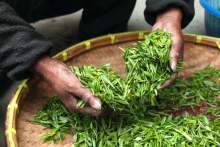
Fair trade is basically a way of helping farmers in the countries of the global majority, who produce a significant amount of crops that we consume in the west, such as sugar, tea, coffee, cocoa, bananas, and cotton.

It generally ensures that the producers are paid a fair wage for their produce.

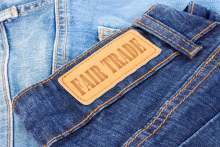
Fair trade certification is awarded to products that match a number of ethical criteria. Those that match the criteria are awarded the fair trade label which they can use on their packaging. 

The pioneer label in this field was Fairtrade, but the last decade or so has seen other fair trade schemes be set up.

Importantly, with Fairtrade the companies are all independently audited so you can trust that those who gain the label really deserve it and that those working on farms directly benefit.

With some newer fair trade schemes, particularly those set up by companies themselves, there may be less rigorous monitoring and auditing.

What is the difference between Fairtrade and fair trade?

Fair trade is not a protected term, meaning that there is no set legal definition. (Compare this to, for example, organic, which can only be used in very strict circumstances.) 

Fairtrade (one word and capital F) is used to describe the labelling system and certification process regulated by Fairtrade International. All other variants e.g. fair trade or fair-trade, refer to the theory of fair trade rather than a specific scheme.

So any company can call their products fair trade, based on their own definition of fair trade. Food companies who've developed their own fair trade labels include Starbucks, Mondelēz, Nestlé, Mars and Lindt.

Aswell as Fairtrade International, there is also the World Fair Trade Organisation (WFTO) and the Fair For Life label.
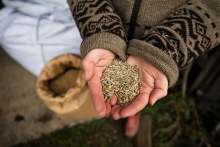

Four main benefits of fair trade

The benefits of buying fair trade produce can be broken down into four main areas.

1.  Fairer payment for produce and labour

Perhaps most importantly fair trade offers a minimum price to producers for their produce.

With the Fairtrade certification scheme, if prices in the global market drop below this level farmers selling to Fairtrade distributors or companies can be sure they still get a fair price for their produce and won't slip into poverty or make a loss on each box sold.

2. Environmental benefits

Most fair trade schemes include provision for looking after the environment as well as workers. 

For example, within the Fairtrade standards there are a number of criteria that farmers must adhere to which relate to the environment. These include: 

  • To source water sustainably and reduce water use as much as they can over time.
  • To not use any GMOs.
  • To minimise the use of potentially hazardous chemical fertilizers and pesticides

Other aspects may include preventing deforestation. It doesn't however, mean something is organic.

3. Workers' rights

Fair trade schemes also contain criteria on the rights of workers. These generally include the right to:

  • freedom of association
  • collective bargaining
  • non discrimination

It also prohibits child labour, ensures safe working environments, 

4. Social benefits

Many fair trade schemes will also seek to direct profits to improving the local community where something is grown or manufactured. 

For example, with the Fairtrade certification scheme, the price paid by consumers contains a 'premium'. This is an amount of money on top of the price of the product. This 'premium' is used for investment in local projects and infrastructure such as better sanitation, schools and local medical facilities.

Ethical Consumer's inclusion of fair trade in rating assessments

Because Ethical Consumer consider fair trade to be so important in driving change around the world, we award more points in our scoring system to products that carry fair trade labels. 

However, not all fair trade certification schemes are equally robust, and we currently rate Fairtrade the highest. 

Not everyone agrees with this view, and in an opinion piece, Juan Andres Santelices, representative of Paccari Chocolate in the UK, makes the argument that Fairtrade has become a sticking plaster for an unjust and colonial chocolate industry. 

Our article on fair trade food has more details.

Read more about our scoring system.


Where to buy fair trade items?

Fair trade items can be identified by the appropriate logo on the label.

Supermarkets have some fair trade items, but you can often find more in independent wholefood shops, Oxfam, and also ethical online food retailers. 

Fair trade and food

What does ‘fair trade’ mean in the food industry?

We take a look at the world’s leading fair trade label, alternative fair trade standards, and a selection of brands that sell fair trade food.

A quick guide to fair trade and food

Fair trade and fashion

We take a look at the world’s leading fair trade standard, alternative fair trade labels, and a selection of fashion brands selling fair trade clothing.

A quick guide to fair trade and fashion

This article was first published in 2018 and most recently reviewed and updated in September 2026.