Should We Boycott Palm Oil?

Palm oil is used in a wide range of products, from chocolate to shampoo, and also to power vehicles. Yet it has serious environmental and social impacts. 

So should we boycott palm oil? We share our advice for consumers. 

With palm oil causing widespread deforestation and violations of indigenous rights, we share our advice for consumers on whether to boycott all palm oil or buy sustainable palm oil products. 

Palm oil has been a problematic ingredient for over 20 years. Concerns about its damage to forests, climate, people, and endangered species have grown over this time. 

Ethical Consumer has tracked the issue, and considers what consumers can do about the use of palm oil.

A whole raft of initiatives exist to try and solve the problems in the industry. These involve hundreds of companies, international campaign groups like Greenpeace and WWF, huge certification schemes like the RSPO and even some governments and the World Bank.

The trouble is that none of these initiatives appear to be working, with deforestation in countries like Indonesia to meet the growing demand for palm oil still happening on a massive scale. 

What can consumers do?

Ethical Consumer believes avoiding palm oil or choosing products with top sustainability certifications are reasonable responses to the complex issues. Use our shopping guides and palm oil ratings to help you decide. We provide resources to support either approach to this issue, empowering consumers to make informed choices.

We highlight companies which are palm oil free and those that are not, but get best marks for making some progress on the issue. We also incorporate into our ratings external criticisms, such as those from Greenpeace, of companies’ palm oil supply chains. The full details of how we arrive at the rankings appears on our website and, for logged-in subscribers, in the company stories that sit behind the table scores.

The sense of urgency is increasing. In recent years, there has been repeated criticism of the main palm oil certification RSPO, which we explore in a separate article.

However, the key campaigners in this field – Greenpeace included – are not arguing for a consumer boycott of all palm oil. Lots of groups recognise that pressure from western consumer markets is at least driving some environmental standards into the industry, while lots of growth is coming from markets – like those in China and India – without similar demands for environmental standards.

Of course, the growing use of palm oil is also heavily linked to the increase in the amount of processed foods consumed in the west. Cooking fresh meals can have multiple benefits such as avoiding fat, sugar, salt as well as palm oil. 

In addition, it is always worth keeping up with the name-and-shame campaigns from the big advocacy groups like Greenpeace and Ekō (previously called SumOfUs). Strategically avoiding the worst companies out there will help create pressure in the right place in the short term, and it certainly makes sense to focus on the companies with the biggest market power. Unilever, for example, uses over 1 million tonnes of palm oil annually, and therefore its power to affect change is far greater than a company using less.

And finally, acting as citizens as well as consumers is important too. Keeping up the pressure to remove palm oil from, for example, transport biofuels (where it is burnt as a fuel for lorries, buses and other vehicles) will be a key part of any plan to halt the destruction associated with this most troublesome of crops. We explore this issue below.

What brands are linked to deforestation via palm oil?

Greenpeace and many other key campaign groups work outside the RSPO, naming and shaming companies that fail to ensure deforestation-free supply chains.

In 2022, for example, the environmental advocacy group Rainforest Action Network published a report naming companies that were “still buying illegal palm oil from [a] protected reserve in Sumatra’s Leuser Ecosystem” – a peat forest in Indonesia. The peat forest stores large amounts of carbon, leading campaigners to refer to plantations on the land, which release the emissions, as “carbon bombs”.

According to the report, companies including Colgate-Palmolive, Nestlé, Ferrero, Nissin Foods, Kao, PepsiCo, Mars, Procter & Gamble, Mondelēz, and Unilever had “failed to break their ties to illegal palm oil grown at the expense of carbon-rich peatlands inside the reserve”, despite years of campaigning. No response from the companies could be found. 

In 2024, Friends of the Earth likewise released a report naming brands, investors, and banks linked to the palm oil company PT Astra Agro Lestari (AAL). AAL – the second-largest palm oil company in Indonesia – has been named by the United Nations over allegations of land grabbing; intimidation and criminalization of local communities peacefully protesting; and environmental degradation, such as pollution of water resources.

Friends of the Earth stated that multinationals including food company General Mills (which owns brands like Häagen-Dazs and Cheerios) and cleaning company Reckitt (which owns Dettol, Vanish and Cillit Bang) had failed to take action to exclude AAL from their supply chains. Neither Reckitt or General Mills responded to the allegations. 

Boycott brands linked to West Papuan palm oil

While consumers may not choose to boycott all forms of palm oil, Indigenous campaigners have called for a boycott of brands associated with some of the most problematic production. 

Over 90 West Papuan groups call for a boycott of companies profiting from ecocide in the world’s third-largest rainforest until West Papua has self-determination.

West Papuan campaigners say that companies including Nestle, Mondelez and Proctor and Gamble source palm oil from West Papua, which has been under Indonesian control since 1963. Thousands of acres of rainforest have been cleared for agriculture in the region, where West Papuans are being forced, with violence, to leave their lands.

A recent Indonesian Supreme Court ruling curbed expansion of the Tanah Merah palm oil plantation but did not grant land rights to the Awyu tribe, leaving them vulnerable.

The groups called for a boycott of Hershey’s, KitKat, Smarties, Aero, Oreo, Ritz, and Pantene and Herbal Essences.

These confectionery and shampoo brands are palm-oil based and owned by US conglomerates:

Is palm oil used in biofuels?

Biofuels are produced from organic matter like plant material and animal waste and are burnt to produce energy. Worldwide, around 5 percent of palm oil is used for biofuels, mainly to power transportation.

In Europe, however, the proportion has been much higher. In 2018, 65% of all the palm oil imported into the EU was used for energy, mostly for use in cars and trucks, compared to only about 20% in 2008. This use meant that overall demand for palm oil was not falling, despite cuts in palm oil use for food, as research by Transport and Energy revealed.

This led New Scientist to publish an article arguing that “plans to ditch palm oil are missing the real issue: forget food, it’s in your car”. 

Since then, the European Union has set targets to phase out the use of palm oil in biofuels by 2030. It has also banned the import of products linked to deforestation, and restricted how much palm oil could be used in efforts to meet targets for reducing emissions from transportation. The Commission has also moved to reduce the use of palm oil to meet its renewable energy targets, but proposals are yet to be signed off by the Parliament and council. 

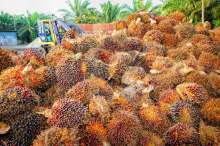
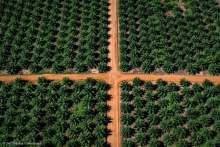
Image: palm oil plantation

How we rate companies for Palm Oil policy

We rate all companies operating in sectors where palm oil use is commonplace, such as cosmetics, cleaning products, and foods like chocolate bars and biscuits. 

Companies that choose to be palm oil free can only score highest if they specify that the alternative they use is certified sustainable. This can be, for example, organic and/or fair trade coconut oil, shea butter, olive oil or any other oils or dairy butter.

Lowest ratings

If companies demonstrate no or minimal commitment to sourcing sustainable palm oil, or have good policies but have still received serious criticisms for abuses in their palm supply chain, they will receive the lowest ratings.

Highest ratings

Companies will score highest if they don't use any palm oil or derivatives. 

Large companies can also score some of the highest ratings if all palm oil and derivatives are certified by the RSPO, with at least 50% coming from Segregated or Identity Preserved supply chains, they list all their mills and producers, and publish an annual grievance list. And they should ensure none of their producers are among those with the most inadequate ‘No Deforestation, No Peat, No Exploitation’ policies. 

We’re a bit more lenient with small and medium companies, focusing much more on whether they are sourcing certified palm and derivatives, or not or, if they are palm oil free, whether they have a credible discussion on the alternative’s sustainability.

Are there any alternatives to palm oil?

Commentators note that there aren't clear, scalable alternatives to palm oil in food without causing other problems. Palm oil has a very high yield per acre, and replacement vegetable oils would require much more land.

Laboratories around the world are therefore trying to find a viable alternative. Scientists from Abu Dhabi claim to have found an algae that “naturally produces large quantities of palmitic acid – the fatty acid that is a major component in palm oil.” A research team from the University of Bath claim to have produced a palm-like oil from yeast. And a New York ex-investment banker, with backing from Bill Gates, is also trying to commercially scale a yeast-based alternative. 

However, Greenpeace chief scientist Doug Parr has expressed his reservations with these projects, saying:

“I think you have to be quite beady-eyed about the challenges of getting from the lab to commercial production ... on the sort of scale that’s going to impact the palm oil industry. We shouldn’t imagine for a moment there is a sort of ‘get out of jail free’ card for the tricky corporate and political transition that needs to be taking place in countries where palm oil is a major damager of important forests.”

10 things you need to know about palm oil

What legislation is needed to regulate palm oil?

International commitments 

Governments must address deforestation, habitat loss, workers' rights, and climate change from palm oil production. Many countries and campaigners call for binding international commitments on tackling deforestation at the United Nation’s international COP climate summits. 

COP30, which was held in Belem, on the skirts of the Amazon rainforest, in 2026, saw governments establish a new fund that aims to provide long-term financial incentives for conserving tropical forests. And over thirty governments agreed to secure 160 million hectares of Indigenous and community lands by 2030. 

Yet, key agreements fell far short of providing a strong roadmap to halt and reverse deforestation and forest degradation by 2030 - a step that academics say is vital to tackling climate breakdown. 

Deforestation laws

The European Union has led the way in introducing legislation to tackle deforestation from palm oil and other products.

In 2023, the union agreed to laws aimed at preventing the sale of deforestation-linked products across the bloc. The law would have reduced EU-driven deforestation by 30 percent, saving at least 72,000 hectares of forest every year from 2030, according to the European Commission’s own assessment.

However, the law was significantly weakened in 2025 following intense lobbying, and its implementation was delayed until the end of 2026. 

Major palm oil producing countries like Indonesia and Malaysia have also challenged the law at the World Trade Organisation - an international body that rules on disputes about free trade. 

The need to report supply chain emissions

In the absence of legislation, companies are left to choose whether or not to take responsibility for emissions in their supply chains. 

In our 2025 Climate Gap Report, we suggested that the first step towards doing this was to report these ‘scope 3’ emissions figures – but also for governments to require companies to do so.

Due diligence

Several countries are adopting ‘due diligence’ legislation to make large companies responsible for various human rights and environmental risks in the supply chains of consumer goods. Such laws could be used to protect against deforestation for palm oil.

France and Germany passed laws in 2017 and 2021. In February 2026, the European Union agreed a similar law - although it was significantly watered down following widespread industry lobbying. 

145,000 people signed a petition calling for the UK to adopt its own due diligence laws. The advocacy group Corporate Justice Coalition is leading a campaign to get companies and MPs on board: you can find out more about it on their website. 

Take action

As well as avoiding some or all palm oil, there are other ways to take action on palm oil:

1) Call for a law holding corporations to account

The Corporate Justice Coalition is demanding a new UK law to force companies to prevent environmental damage and human rights abuses in their supply chains - as explained above.

You can sign their petition on the website for Friends’ of the Earth, a member of the coalition.

2) Tell big brands to stop buying dirty palm oil

You might also want to send a message to the brands buying harmful palm oil. Greenpeace Australia has a petition asking them to change their ways.

3) Let brands know you are boycotting them

For those who want to boycott palm oil, you can multiply your impact by making sure brands know that you’re taking action and why.

West Papuan communities are calling on consumers to boycott Hershey’s, KitKat, Smarties, Aero, Oreo, Ritz, and Pantene and Herbal Essences. Why not start by emailing or writing to one of these brands and letting them know about your concerns?

4) Support campaign groups calling for action

Support groups who campaign and research on palm oil, and others mentioned in this article: