The Beautiful Game?
Ethical Consumer's product reports are usually about choice. We try to set out the ethical issues with the various different brands of clothing, or washing machine, or baked bean, that you might select. And then you, the reader, can choose which ones fit your criteria of ethics, availability and affordability.
Now, we can't really ask you to choose your football team on the basis of ethics. We appreciate that the passion and fire of football supportership is not about to be subordinated to issues like which team has the greenest stadium, the most worker-friendly replica kit, the least planet-wrecking owners.
But given the massive corporate interests associated with the big British football clubs nowadays, the increasing acknowledgment
that environmental and social issues are of relevance, and the growing differences between those clubs which do and do not
engage with ethical issues, we thought it was about time we created a league table of our own.
It's all gone quiet over there
Ethical Consumer always starts its research for any buyer's guide by asking the companies covered to tell us about themselves. We send out questionnaires asking about environmental, social and animal welfare issues. Some companies reply. Some just send us links to the reports they already have online, which is fine. Some send us loads of very useful information.
It's not just a chance for us to rate their environmental and social eporting, but an opportunity for them to tell us about good stuff that they're doing.
The responses from football clubs have been the worst that I've known in nine years of writing buyer's guides for EC magazine.
Half a dozen clubs answered: all of them to say that they did not fill in questionnaires. Two of them, Arsenal and West Bromwich Albion, added that the information we asked for could be found on the club's website (which was only partly true) (1) (2).
Only Man City and Chelsea had existing CSR reports on their websites, and Chelsea's was dated 2005/6. Any acknowledgment from the various clubs that they might have wider social responsibilities focused (rightly in some respects) on tackling the racism that has been a major problem in British football, and on promoting social inclusion in the communities that each club relates to.
But given the appalling working conditions faced by thousands of labourers making the kits that all major football clubs sell (at prices regularly criticised by fans), the total absence of any policies addressing workers' rights at supplier factories from the entire Premiership is disturbing.
Fair Pay?
The sky-high wages paid to Premiership footballers are regularly criticised by those inside and outside the profession. According
to the Professional Footballers' Association, Premiership wages averaged £676,000 in 2005/6, with some high-profile players being paid a lot more (8).
A Fabian Society/YouGov poll in 2007 found that the British public felt that the average pay for a Premiership football should be around £62,000 – less than a tenth of their actual wages, but still more than five times that of many low-paid workers (9).
But an August 2008 report by the IPPR highlighted the appalling rates of pay for lowlier football club employees, such as catering workers, cleaners and stewards.
The research found that all of London's Premiership clubs offered jobs at the British national minimum wage of £5.52.
A 'London minimum wage' endorsed by the Greater London Authority and by new Mayor of London Boris Johnson is supposed to represent the actual minimum on which London residents can lead a decent life – and that's £7.45 per hour.
As well as poor rates of basic pay, the report also found many Premiership clubs exploiting the desire of fans to carry out work which is perceived as helping or being associated with their team, such as selling lottery tickets or programmes.
Alan Keen, Chair of the all-Party Parliamentary Group on Football, commented on the report's launch, saying that "the running of a Premier League Club depends on staff in a wide variety of roles. Every one of them deserves a wage that enables them to live free from poverty. I urge the clubs to show a lead and deliver fair pay and fair employment conditions for all their staff."
The campaign also has the support of the current sports minister and of the Football Supporters' Federation. While workers in the UK get ripped off by Premiership clubs, those in the factories which make the replica football strips which are a major money spinner for the clubs also suffer to generate the kind of revenue needed to pay top player rates.
In 2006, the Clean Clothes Campaign ran a high-profile campaign during the World Cup attacking the records of sportswear
companies like Adidas for allowing workers in their supplier factories to endure low wages, insecure jobs, harassment and the denial of the right to unionise (6).
And during the 2008 Olympics, the pan-European Playfair2008 network has again highlighted the failings of companies such as Nike, Adidas and Puma to live up to their promises to offer decent, fair standards of employment for all the workers in their supply chains(7).
See the table below for which clubs source their replica kit from which manufacturers.
Obviously, football clubs get hundreds of messages a day, from fans and people doing school projects and journalists muck-raking. But they are public organisations which depend on public support, and that means being accountable to the outside world, and being open and honest about what they are and are not doing.
Football Kits
| Supplier |
Team(s) |
Ethiscore |
Comments |
| Adidas |
Chelsea Liverpool Newcastle United |
5.5 |
The Clean Clothes Campaign reported in spring 2007 that up to 10,500 Indonesian workers had been made redundant from Adidas supplier factories.
NGOs including Oxfam Australia were said to have blamed Adidas buying practices for the job cuts (25). |
| Canterbury |
Portsmouth |
10 |
New Zealand-based sportswear brand. |
| Champion |
Wigan Athletic |
9.5 |
Owned by Hanes Brands, which also makes Wonderbra and Playtex underwear. According to the Clean Clothes Campaign, striking workers at a supplier factory in the Philippines were beaten by police (25). The company's Duofold brand sells hunting apparel (26). |
| Coq Sportif |
Manchester City Stoke City |
11 |
Criticised by labour rights campaigners for using anti-union factories in Turkey and
Indonesia (27) (28). |
| Errea |
Middlesbrough |
12 |
Italian sportswear manufacturer. All products are compliant with the European Oeko-tex
health and environmental standard. |
| Nike |
Arsenal Aston Villa Fulham Manchester Utd |
8 |
Despite its openness in reporting labour rights infringements in its hundreds of supplier factories worldwide, Nike still comes in for criticism for using factories which abuse workers' rights. In addition, in 2007 the company also had to pay out over $7 million in compensation to African-American employees of one of its stores who were found to have been discriminated against (29). |
| Puma |
Tottenham Hotspur |
5.5 |
In March 2008 China Labor Watch produced a follow-up report on a Puma supplier in
Taiwan which claimed that the 'dreadful' conditions in the factory had not improved in the 3 years since it reported on abuses there (30). |
| Reebok |
Bolton Wanderers |
6 |
(owned by Adidas – see above) |
| Umbro |
Blackburn Rovers Everton Hull City Sunderland West Bromwich Albion West Ham |
9 |
(owned by Nike – see above) |
Where does the money come from?
Arsenal
Arsenal's ownership is currently in flux, with Uzbek billionaire Alisher Usmanov holding just shy of 25% but being prevented by other shareholders and the board from acquiring a controlling stake. Other shareholders include US real estate billionaire Stan Kroenke, who may be looking to buy the club in the future, Danny Fiszman (diamond entrepreneur) and Lady Nina Bracewell-Smith (family money from luxury hotels) (3).
Aston Villa
Aston Villa is owned by US billionaire Randy Lerner, whose fortune comes from selling his stake in MBNA Bank, which his family
established.
Blackburn Rovers
Blackburn Rovers is majority controlled by a trust representing the Walker family, whose money came from enterprises including
Flybe and steel manufacturing (3).
Bolton Wanderers
Bolton Wanderers is owned by local millionaire Eddie Davies, whose money originates with kettle controls manufacturer Strix. He sold his stake to ABN Amro Bank in 2005.
Chelsea
Chelsea is famously owned by Russian billionaire Roman Abramovich, whose vast wealth stems from holdings in former Soviet state enterprises such as oil and gas, now sold. His current business interests include a number of mines in Russia which have been prosecuted for pollution, and one in which over a hundred workers were killed in an explosion in 2007 (18).
Everton FC
Everton FC has a number of shareholders, of which the largest is Robert Earl. He founded and co-owns 'celebrity' restaurant
chain Planet Hollywood.
Fulham
Fulham is owned by controversial Harrods owner Mohammed al-Fayed, father of Dodi who died alongside Princess Diana. Harrods has been criticised by trade unions in the UK for signing up to the 'dismissal database,' a record of employees who had been accused of acts such as forgery, dishonesty and theft. Critics claimed that the database could lead to individuals being blacklisted without ever being found guilty of such crimes (19). Harrods has also been criticised for selling fur (20).
Hull City
Hull City is currently owned by a trio of businessmen with interests in property and media.
Liverpool FC
Liverpool FC is owned by a pair of warring American businessmen. George Gillet's money comes from business interests which currently include a number of meat farming and processing companies (21). Tom Hicks helped establish major private equity partnership 'Hicks, Muse, Tate & Furst' but sold his stake and now has investments in companies including an Argentinian animal
feed manufacturer and a company whose website proudly lists the range of military vehicles and aircraft for which it supplies
parts (22).
Manchester City
A majority stake in Manchester City was recently sold by deposed Thai dictator Thaksin Shinawatra, who now lives in exile in London. The majority of the club is now owned by members of the al-Nahyan ruling family of Abu Dhabi, who also have major
interests in the oil industry and companies providing parts and maintenance for military vehicles and aircraft.
Manchester United
Manchester United is owned by US tycoon Malcolm Glazer, whose fortune comes from range of investments over the years, all now
sold, included oil exploration with George W. Bush and fish protein processing.
Arsenal's
Middlesbrough is owned by Steve Gibson, a self-made millionaire whose wealth comes from his trucking company, Bulkhaul.
Newcastle United
Newcastle United was, at the time of writing, said to have been put up for sale by owner Mike Ashley. Ashley was the majority shareholder in Sports Direct International, whose sportswear brands include Dunlop and Karrimor.
Portsmouth
Portsmouth is owned by Russian millionaire Alexandre Gaydamak, whose wealth derives partly from a range of investments and partly from father Arkady, the businessmanowner of the Beitar Jerusalem football team in Israel, who divides his time between Moscow and Tel Aviv after fleeing a French arrest warrant over sanction-busting arms sales to Angola in the 1990s (5).
Stoke City
Stoke City's owner Peter Coates made his money from from the online betting company Bet365.
Sunderland
Sunderland is owned by a consortium of mainly Irish businessmen with interests in sectors such as construction, pubs and travel. Byrne Bros, the building company owned by one of the consortium, was fined a total of £60,000 in 2005 for health & safety
breaches on building sites in London (23).
Tottenham Hotspur
Tottenham Hotspur is majority owned by entrepreneur Daniel Levy via sports and media investment company ENIC International.
West Bromwich Albion
West Bromwich Albion is half owned by stockbroker Jeremy Peace, and most of the rest of the club's shares are owned by fans
who bought in during share issues in the 1990s.
West Ham United
West Ham is owned by Icelandic banker Bjorgolfur Gudmundsson, whose wealth stemmed from his holdings in Landsbanki Islands [a bank which offered offshore banking services in tax havens such as Guernsey and Luxembourg (24)], but who has also had interests in brewing and shipping.
Wigan Athletic
Wigan Athletic is owned by Dave Whelan, former owner of the JJB Sport retail chain.
Club Sponsors
| Team |
Main Sponsor |
Ethiscore |
Comments |
| Arsenal |
Emirates Air |
4.5 |
Connected via owners the Government of Dubai to companies which provided services to the US army in Iraq and to the oil industry. |

| Aston Villa |
Acorns Children's Hospices |
n/a |
In June 2008 Villa announced that it would forgo a possible £2 million sponsorship deal for 2008/9 in favour of giving the club's nominated charity free advertising on the team's shirts (13). |
| Blackburn Rovers |
Crown Paints (Akzo Nobel) |
6.5 |
Major international chemical company |
| Bolton Wanderers |
Reebok |
6 |
See kit suppliers |
| Chelsea |
Samsung |
5 |
Former chairman Lee Kun-hee was given a suspended sentence in 2008 after being found guilty of massive tax evasion. Korean investigators had also accused him of keeping a $100 million slush fund to bribe politicians in Korea (14). |
| Everton |
Chang Beer (Thai Beverage Co) |
10 |
|
| Fulham |
LG Electrical |
6 |
Korean electrical goods company listed as having operations in the 'murderous' regime of Uzbekistan (17). |
| Hull City |
Karoo (Kingston Communications) |
12 |
|
| Liverpool |
Carlsberg |
9 |
|
| Manchester City |
Thomas Cook |
8 |
Majority owned by Arcandor (formely Karstadt Quelle), the German retail chain which was one of the main customers of the Spectrum Sweater factory in Bangladesh, which collapsed in spring 2005 killing 74 workers (15). |
| Manchester United |
AIG |
3.5 |
Recently bailed out by the US government following credit-crunch losses, AIG had one of the lowest ethiscores in Ethical Consumer's insurance report in November 2007. |
| Middlesbrough |
Garmin (satnav) |
9.5 |
International company based in the Cayman Islands, a tax haven. |
| Newcastle United |
Northern Rock |
12.5 |
Given Northern Rock's financial troubles in the past year, it's been suggested that its continued sponsorship makes Newcastle Britain's state-funded football team. |
| Portsmouth |
Oki printing |
9.5 |
Japanese electronics company listed by the International Defence Directory as a supplier of military communications equipment (16). |
| Stoke City |
Britannia Building Society |
13 |
|
| Sunderland |
Boyle Sports |
11.5 |
Irish gambling company registered in the Isle of Man, a tax haven. |
| Tottenham |
Mansion.com |
11.5 |
Gibraltar-based gambling company owned by Indonesian tobacco tycoon Putra Sampoerna. |
| West Brom |
T-Mobile (last season) |
9.5 |
Last season's sponsors. The credit crunch has meant that West Brom has failed to find a new sponsor. |
| West Ham |
|
|
|
| Wigan Athletic |
JJB Sports |
10 |
|
Green stadiums and community schemes
Football grounds, with their massive water use and high-energy floodlights, are the site of many of the main environmental impacts of most football clubs, while the thousands of fans who travel to big sports events generate huge amounts of waste and carbon emissions travelling and sustaining their big day out.
Football fans who came to Cardiff to watch the 2004 cup final left 2.5 tonnes of litter strewn around the city centre. Researchers from Cardiff University found that the biggest environmental impact from fans was travel emissions, and have suggested that one way to encourage more people to use public transport could be to offer all-in tickets, combining match entry and local bus and train travel (11).
A number of clubs have been making serious efforts to clean up their act, adopting green practices on-site and encouraging their
fans to make environmentally conscious choices.
These include:
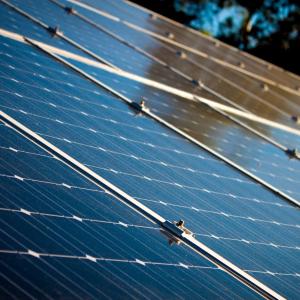
Manchester City, where recycling initiatives and eco-friendly paper products have been joined by on-site electric vehicles, experiments with rainwater toilets and solar energy.

The club, in conjunction with Ecotricity, also tried to build an 85 metre high wind turbine outside its new East Manchester stadium, but concerns over ice dropping off the blades and onto fans entering the ground have stalled that plan. Man City has also boasted the country's first 'eco-friendly match programme,' printed on sustainably-sourced paper and printed with vegetable inks.

Most significantly, Man City has also worked with the local council and public transport providers to co-ordinate buses and trains and to promote safe walking and cycling routes. According to Pete Bradshaw, head of corporate responsibility at the club, this has led to a 50% cut in the number of parking spaces needed, with over 70% of fans coming to matches on foot or by bus.12
Arsenal, which was also said to be considering an on-site wind turbine but which has in the meantime fitted flushless toilets, signed up to a green energy tariff and gone beyond the usual glass and paper to recycle plastics and cardboard and have waste cooking oil turned into biodiesel.
Middlesbrough now looks like it may beat Man City to become the first club with its own wind power.
Non-league Dartford is, however, ahead of the environmental game with its ecostadium at Princes Park. It has two rainwater lakes for the staggering 20,000 litres of water a day it takes to maintain a football pitch, as well as solar panels, sustainably sourced timber framework, state-of-the-art insulation and a 'living roof.'
Brighton & Hove Albion is said to be hoping to follow suit with plans for its Falmer stadium.
Health of Nations
In June 2008, the World Development Movement looked at the countries competing in Euro 2008 and suggested the most ethical
national teams to cheer for.
Based on ratings of military spending, greenhouse gas emissions, health provision and corruption levels, WDM's advice put Sweden at the top of the list, followed by Austria and Croatia, with Italy, Greece and Russia scoring worst.
The complete list, including the option to see which countries do best on specific issues, is at www.whoshouldicheerfor.com.
Supporters Trusts
While the investments of billionaires from Russia, Thailand and the USA (as well as closer to home) hit the headlines, supporters
also have a major role to play in their clubs.
When management fails to deliver results or are seen to behave in ways that bring disrepute to the club, fans are rarely backwards in coming forwards. Fans' criticism of the recent bickering between Liverpool owners Tom Hicks and George Gillett has been vociferous, while the problems imposed on clubs when they're put in financial jeopardy by owners' loans is a major cause for controversy.
Most clubs have a Supporters Trust, not-for-profit bodies which work a little like consumer co-operatives to represent the interests of fans. In some cases, like that of Manchester United, they have a history of conflict with club owners, with MUST, the Man Utd trust, seeking to gain a stake in the club itself.
A splinter group of Manchester United fans even left their old club to set up FC United of Manchester, based in the north of the city, to allow fans a more democratic role in their football team's future.
In other cases there are good relations between club owners and trusts, while in some instance – such as Stockport, Notts County and Brentford – the trust actually owns the club.
More information: Supporters Direct, www.supporters-direct.org, can provide comprehensive information on how to set up and run supporters' trusts, as well as case studies and sample documentation.
Paid too much?
At Ethical Consumer we reduce a company's rating if it pays its directors excessively (more than £1 million per year). In the world of football, it is not unusual for star players to receive this kind of salary. Is this a corporate responsibility issue? ECRA staff are divided.

Will Hodson argues that players are a soft target.
It started with abuse from the mob: "You'd play better with your hands out of our pockets!" chanted the crowd. It progressed to menacing late-night house calls.
Finally, contract negotiations ended with the footballer caving in and signing a deal significantly below his market value. His club president, who sent the thugs to his home and orchestrated the chants in the stadium, rubbed his hands in glee.
Such skulduggery is regular practice in South American football. Meanwhile in Britain, an English international had his salary demands plastered all over the tabloids' back pages: "Greedy star demands £4m per year!" raged the red-tops.
It's worth noting that media groups have often held shares in England's top clubs. A rabid campaign started up against the player. He eventually settled for a more modest figure. No prizes for guessing who leaked his initial demands to the press.
Directors of private companies (which many clubs are)... who knows how much they earn? And unlike footballers, they have a duty to provide sound financial management. So if Chelsea's cleaners earn less than living wage, blame their chief executive, not their centre-forward.
A footballer is just a worker, even when he earns a fortune from his trade. Historically, club owners have held their players in a feudal grip. Even when a player's contract expired, any new employer had to pay a fee to the club for his release.
In 1995, the European Court of Human Rights changed all that. Following the Bosman Ruling, a footballer is free to leave when his contract expires, like any other worker. Now players demand higher wages to sign longer contracts. This increased bargaining power derives entirely from a basic human right – freedom of movement. According to Deloitte, players' wages can now account for 60% of a top club's turnover.
This profit-squeezing anomaly justifies football as a sport for some people – a quest for glory rather than shareholder value.
Workers are taking most of the fat cats' pie. Should we not celebrate that?
If we are disgusted by the portion, perhaps we should look at the size of the pie. Why do clubs have so much money in the first place? Is the wider business model ethical?
Our buyer's guide suggests that perhaps it is not. Owners and execs would prefer we target players, of course. However, if footballers' wages fell to 30% of revenue, clubs would not pay better wages to cleaners; they would simply make better investments for capitalists.
References
1 email from Arsenal football club, 7/8/2008
2 email from West Bromwich Albion FC, 8/8/2008
3 Sunday Times Rich List 2008
4 PKF Football Finance Survey 2008
5 The Independent, 3/1/2006
6 www.cleanclothes.org, 8/2008
7 http://playfair2008.org, 08/2008
8 www.bbc.co.uk 11/4/2006
9 www.fabians.org.uk, viewed 8/2008
10 www.theglobalgame.com 5/9/2007
11 New Scientist 16/4/2005
12 Statement by Pete Bradshaw of MCFC at wind turbine plan launch, September 2007
13 www.bbc.co.uk 3/6/2008
14 New York Times 17/7/2008
15 Clean Clothes Campaign press release 11/10/2005
16 International Defence Directory 2007
17 Ethical Corporation 20/7/2005
18 forbes.com 24/5/2007
19 Labour Research, June 2008
20 Independent 10/12/2006
21 Hoovers.com viewed 21/8/2008
22 www.latrobesteel.com 21/8/2008
23 Health & Safety Executive 15/5/2005
24 www.landsbanki.is 14/8/2008
25 Clean Clothes Campaign newsletter May 2007
26 www.duofold.com 16/9/2008
27 Clean Clothes Campaign newsletter December 2005
28 International Textile, Garment & Leather Workers Federation press release 3/5/2006
29 Chicago Tribune 30/7/2007
30 China Labor Watch March 2008: Taiway Sports Inc investigation follow-up report