Choosing an ethical electric car
With an increase in UK sales of electric cars in the last few years, there is a lot of interest in finding out just how eco-friendly electric cars really are. People are concerned about the sourcing of the minerals used in the batteries, and pollution from tyres.
This guide to electric cars covers these sustainability issues along with the practicalities of buying and running an electric vehicle.
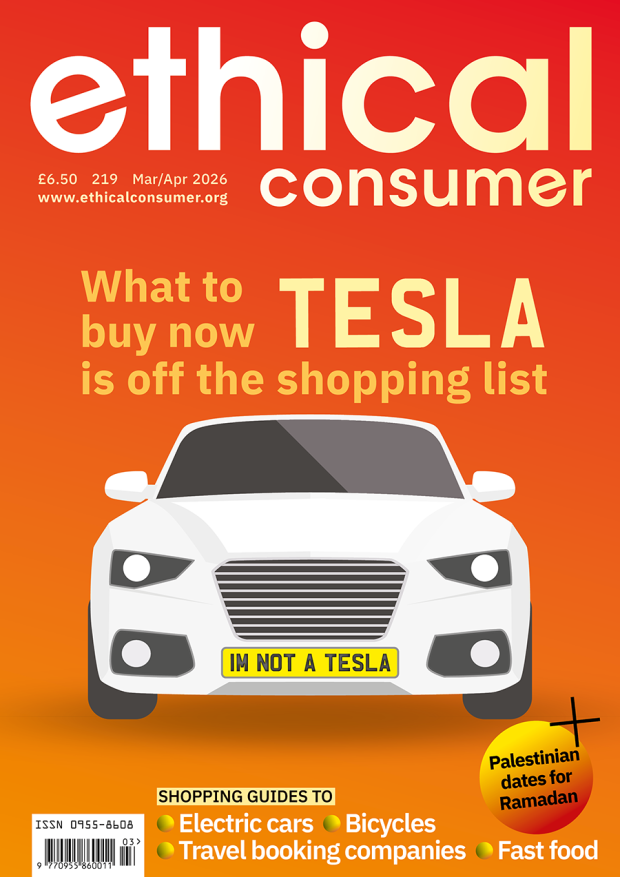
Plus, what are people doing about Tesla cars? We have witnessed the transition of Elon Musk and his Tesla car brand from environmental darling to far-right political activist. This has created a wave of boycotts globally. A key feature of this guide is to outline the problems with Musk and his brand, and help people choose reasonable alternative brands to Tesla.
Rising demand for electric cars
Cars are responsible for 54% of emissions from surface transport in the UK, and their environmental and societal impacts are very present in most of our daily lives. However, with an explosion of lower carbon choices, around one in four cars sold in the UK in 2025 was electric. This represents a 77% increase since our last guide to cars was published in 2022.
In 2025, the UK government's Climate Change Committee stated that: "The uptake of electric cars is having a measurable and rapidly growing effect on [UK] emissions. “Emissions from the surface transport sector fell by 1.9 MtCO₂e in 2024, despite vehicle-kilometres rising.” In addition, they noted that public chargepoint installations increased by nearly 40% last year and that the average price premium of a new electric vehicles has fallen too.
This is rare good news in difficult times. It is more or less what rational transition should look like.
However, as Ethical Consumer noted in our 2025 Climate Gap report, reducing car demand is crucial alongside switching to electric vehicles, because they have problems of their own due to the materials and energy needed to create them. This will require government interventions to make other transport options more attractive and accessible – including public transport, car share options, walking, and cycling.
Which cars are in this guide?
All the brands in this guide have fully electric options, but most of the companies also manufacture petrol, diesel, or hybrid cars too. The only exceptions are Polestar and Tesla which only manufacture electric vehicles.
This guide focuses solely on the electric brands of the car companies included.
We've included all the well-known car brands such as Audi, BMW, Citroen, Fiat, Ford, Hyundai, Jaguar, Kia, Mini, Mercedes-Benz, Nissan, Peugeot, Range Rover, Renault, Skoda, Tesla, Toyota, Vauxhall, Volkswagen and Volvo.
Plus, we've also included several fast-growing Chinese brands like BYD.