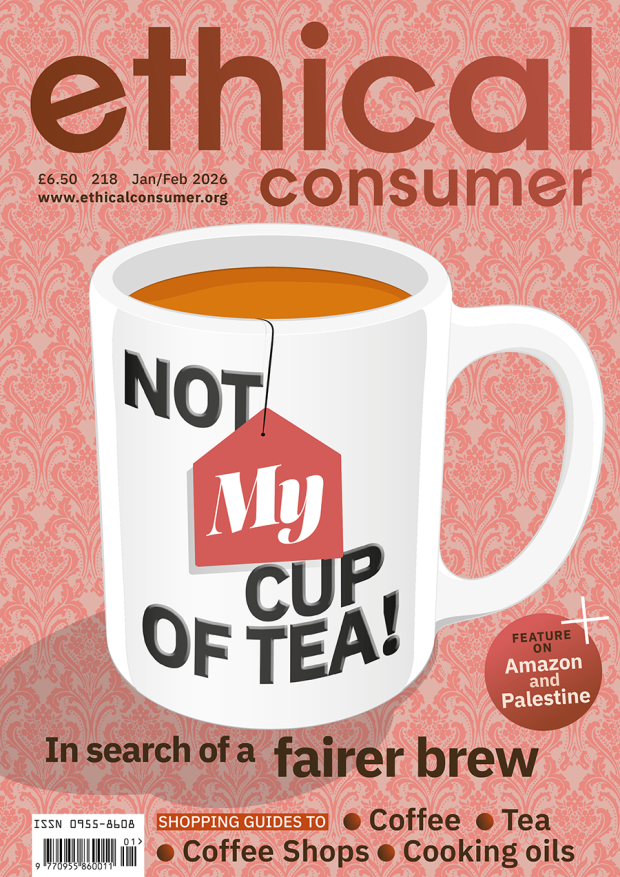
Finding ethical and sustainable tea brands
As a nation we drink over 100 million cups of tea a day, about 36 billion a year, according to the UK Tea & Infusions Association (UKTIA). With 98% of us drinking some type of tea daily, most of our routines are bound to workers across India, Kenya, and beyond. Britain’s love affair with tea was brewed in empire, with many tea estates established by colonial powers to meet the demand of the British market.
Despite changing regimes, extractive labour systems have lingered – nowhere more starkly than in Assam, India. Tea’s role in rural incomes is prominent, but the sector remains overwhelmed with poverty wages, unsafe housing, and gender-based violence.
Yet all hope is not lost.
While the industry remains steeped in inequality, there are brands working to shift the balance and prove that a fairer brew is possible.
With massive differences in ethical scores between the best and worst scoring tea brands, there are many options to switch to a more ethical tea, and avoid the worst brands.
Who tea brands are in the guide?
This guide covers black and green tea. The scoretable and Best Buys also feature herbal brands. A more detailed standalone guide to herbal tea is on our website and will be updated shortly.
In UK grocery retail, the big four brands remain Yorkshire Tea, Twinings, PG Tips, and Tetley. We cover all these brands, plus, who their ultimate parent companies are.
The growing popularity of Yorkshire Tea has extended its lead with a record 37% share of the black tea category in 2023/24, while PG Tips and Tetley have struggled. Most of the other brands in the guide are small by comparison.
You’ll also find the addition of Bird & Blend, which offers matcha tea. While the UK black tea sector is still worth £377m annually it’s only seeing half the growth of fruit and herbal teas. The days of the classic builder’s brew could be numbered with both the older and younger age groups: the former looking to wellness blends to help combat ageing and the latter seeing a generational shift towards matcha, bubble tea, and herbal infusions.
We haven’t re-rated supermarkets here as they are covered in depth in the supermarkets guide.