The problem with alcohol
Alcohol is no ordinary commodity. While for many of us it evokes pleasure and
sociability, the harm it causes is massive and pervasive.
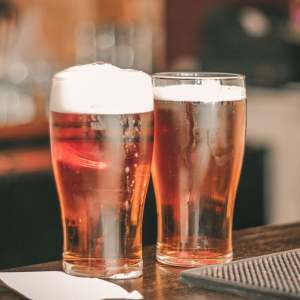
Beer is the third most popular drink in the world, after water and tea.(3)
In the UK consumers spend more than £30bn annually on alcohol, accounting
for an astonishing 5.8% of consumer expenditure.(4) Thats more than we
spend on personal goods and services or power and fuel.
While many of us enjoy alcohol without problems, beneath such levels of consumption
in the UK lie a 95% increase in alcoholic liver cirrhosis since 2000, according
to the Royal College of Physicians, and an 18% increase from 2002-2005 in alcohol-related
deaths. Alcohol consumption is responsible for 70% of peak A&E admittance.
And according to the National Institute for Clinical Excellence (NICE) about
one in four UK adults drinks too much and are damaging, or at least risking,
their health.
Regulating the industry
The drinks industry as a whole is closely involved in Government efforts to
reduce problem drinking. However not everyone agrees that this cosy arrangement
is without problems. In 2006 the Joseph Rowntree Foundation reported that, following
discussions with the industry, a 2005 Government standards document for the
production and sale of alcoholic drinks omitted any obvious mechanisms
of monitoring, implementation and enforcement...(1) According to the Foundation,
the industry was opposed to policies that seek to control overall levels
of alcohol consumption and rejected evidence linking levels of alcohol
consumption to levels of harm.
The alcohol industry spends £800m a year on advertising in the UK, 45
times more than the government spends educating people about the dangers of
alcohol. Promotion is restricted by a voluntary code of practice banning advertising
aimed at under-18s, encouragement of irresponsible drinking, and linking drinking
with social or sexual success or with masculinity or femininity.
However, the British Medical Journal accused the industry this year of pushing
the boundaries of the code, and of using market research on 15- and 16-year-olds
to guide their ad campaigns. Diageo brand Smirnoff Ice was reported to want
to become the most respected youth brand. In our Buyers Guides,
the Irresponsible Marketing column will help identify some companies criticised
in this respect.
A voluntary code of conduct is clearly not enough. According to evidence presented
by Professor Michael Marmot alcohol consumption among 11- to 15-year- olds rises
in line with increases in expenditure on alcohol advertising.(2)
Marmot attributes the increasing problems with alcohol consumption to the fall
in the relative price of alcohol (which relative to income has halved since
1960), the removal of restrictions on alcohol sales, and increased promotion
by the alcohol industry.
The latest advice from NICE about how to tackle problem drinking includes:
a possible ban on all alcohol advertising to protect children; a reduction in
alcohol licensing hours; and a minimum national price per unit of alcohol.
The Scottish government recently rejected a proposal on minimum pricing, as
has the UK Coalition government. The drinks industry claimed it would unfairly
target the poorest families. The Institute of Fiscal Studies (IFS) calculated
a 45p minimum unit price (as suggested in Scotland) would cut consumption of
shop-bought drinks by almost 25% in households with incomes below £10,000.
But only 12% for those with incomes over £60,000.
And minimum pricing, warned the IFS, would hand millions to retailers while
reducing tax revenue. The social costof alcohol in the UK, in ill
health, crime, and social problems has been estimated at £20bn annually
while alcohol taxes provided £13.26bn.(13)
With alcohol consumption as old as civilisation itself we clearly cant
lay all of its associated harms at the door of industry. But nevertheless, society
as a whole is arguably subsidising the harm associated with a highly profitable
industry.
References: 1 Alcohol strategy and the drinks industry: a partnership
for preventions? Rob Baggott, Joseph Rowntree Foundation, December 2006. 2
How Can We Reduce The Burden? Michael Marmot, Presentation at the Royal College
of Physicians, 13 November 2007. 3 The Institute of Alcohol Studies study
2008; revenue figures for 2004.
A bunch of gripes
Leonie Nimmo explores problems and potential in the wine industry.
With the festive season looming its time to brace ourselves once more
for the barrage of consumption most of us will no doubt be putting ourselves
through. And as the recession continues to bite, many of us will be looking
for the discounts offered by the big supermarkets for that crucial Christmas
ingredient: wine. But what are the hidden costs of cheap wine, and are there
ethical, affordable alternatives?
Supermarket own brands, packaged under various labels, account for a fifth
of the UK wine market.(2) The rest is dominated by a few huge companies which
are likely to produce the majority of wines available at your local off-licence.
Then there are the thousands of smaller vineyards and producers. Although we
only include a tiny fraction of them in this report, we do recommend that readers
seek out such brands, as by definition their operations are likely to be more
sustainable than those of multinational corporations. See the links
section below for where to go if you want to swim against the mainstream tide
and buy wine from small producers.
All of the top selling brands in the UK are described as New World,
that is, from outside of the traditional wine growing areas of Europe. In 2008,
five of the top ten wine brands came from Australia, with brands from the USA
and South Africa being the next most popular.(2)
Climate Change
Viticulture, or the production of grapes for making wine, is particularly vulnerable
to climate change.Wine is a bit of a bellwether in terms of some of the
very immediate impacts you see from climate change, according to Australian
Winemakers Federation Chief Executive Stephen Strachan.(1) Weather conditions
play a pivotal role in the final product. They set the parameters for the grape
varieties that are suitable for selection and determine the types of tastes
produced. Australia typically produces full-bodied, robust wines, as arid conditions
result in less water in the grapes, more intense flavours and, generally, higher
alcohol contents. English wines are more likely to be younger and fresher.
Changes in temperature, the length of growing seasons and water availability
have the potential to significantly change global wine production. According
to Jem Gardner of online organic wine retailer Vinceremos, it is climate unpredictability
that is of most concern to wine producers. And these are nerve-racking times.Producers
often only grow grapes, therefore are dependent on just one crop. Factors such
as the timing of rain can have a big impact on yearly harvests.
Irrigation is an essential element of viticulture in arid areas of Australia.
A drought in 2008 led to rising water prices, which threatened to put many farmers
out of business.(1) Temperatures in most wine producing areas of Australia are
projected to increase by between 0.3 and 1.7 °C by 2030. A study conducted
in 2006 found that this increase could result in a reduction in grape quality
in some regions of up to 50%.(5) Winemakers in Australia are therefore being
forced to rethink the types of wine they can produce and the regions they can
grow in. Australian grape vines can be over 130 years old,(6) so such changes
may be difficult.
According to the managing director of Chapel Down wineries in Kent, a half
degree rise in temperature leads to a shift in the area that can be cultivated
for vineyards by 200-250 kilometres further north. Hence, south east England
is now comparable to the Champagne region of France.6 And in the UK, wine is
now produced as far north as Yorkshire.
Food miles, packaging and carbon footprinting
The UK is the worlds largest importer of wine, and research has estimated
that wine consumption equates to about 0.4% of the UKs greenhouse gas
emissions.(7)
The focus of discussions regarding the carbon cost of products has shifted
away from food miles, increasingly seen as an over-simplified model,
to carbon footprinting, which calculates all of the greenhouse gas emissions
caused by a product. Research in the wine sector indicates that this is a much
more accurate approach. In 2007, the American Association of Wine Economists
found that, whilst distance was important, the mode of transport used was also
key in determining the carbon emissions from the transportation of wine. Shipping
was found to be better than roads, which in turn was better than air freight.
Their results indicated that, for people living in New York, it was greener
to consume a glass of French wine that had been transported by sea, than a glass
of Californian wine transported by road.(8) By shifting from roads to canals,
Tesco claims to have reduced its CO2 emissions on bulk wine transportation in
the UK by 80%.(9)
Ethical Consumer could find no evidence that wine companies are beginning to
pass information to consumers regarding the methods of transportation of their
products, so making informed choices is tricky. Of the Corporate Social Responsibility
reports we looked at for this Buyers Guide, none included such information.
Packaging also has a big impact on carbon emissions. Wine accounts for more
packaging than any other product in the food and drink sector, totalling 8.75
billion tonnes of glass annually.(10) Research conducted by the Waste &
Resources Action Programme (WRAP) in 2007 found that carbon emissions from the
transportation of wine can be reduced by over 30% if the wine is bulk imported
rather than bottled at source.(4) WRAP is working to encourage producers to
adopt measures such as bulk importing and using lighter weight bottles to reduce
carbon emissions.
Put A Cork In It
Cork is a 100% natural, sustainable and renewable product. And no trees are
felled in the production of natural cork. It takes 25 years for a tree to be
ready for harvest and then the bark is harvested every nine years for up to
two centuries. Production of natural cork stoppers causes ten times less CO2
emissions than plastic stoppers, derived from petroleum, and 24 times less than
screw caps, materials for which are sourced from open-pit bauxite mines.(22)
Cork for wine bottles is harvested from oak trees in the Mediterranean. Cork
oak landscapes cover nearly three million hectares from Portugal and France
to Algeria and Tunisia. The industry provides income for more than 100,000 people.
Around 30,000 people rely on the cork industry for employment in Portugal alone,
ranging from the tiradors who harvest the cork through to those
who work in processing. And while cork has many uses, the wine stopper is the
Portuguese economys most important cork product. Of 15 billion wine corks
produced globally every year, 60% are made in Portugal.
But the traditional areas of cork production are under threat, as a result
of wine makers increasingly favouring synthetic stoppers and screw tops over
natural cork. Three-quarters of the Western Mediterraneans cork oak forests
could be lost within the next 10-15 years as a result, according to a 2006 WWF
report, Cork Screwed?.
These landscapes support one of the highest levels of biodiversity among forest
habitats, including globally endangered species such as the Iberian Lynx, the
Iberian Imperial Eagle and the Barbary Deer. Oak agroforestry systems in Portugal
also provide grazing land for indigenous pigs, sheep, goats and cattle.
Ethical Consumer carried out a quick survey in a nearby supermarket and found
that nearly all the New World wines on the shelves use a screw top,
whereas European wines were more varied. Of those that had a more traditional-style
stopper none appeared to indicate on the label whether the stopper inside was
made from cork or plastic, which therefore makes it impossible for consumers
to make informed buying decisions. Marks & Spencer, Sainsburys and
Waitrose include information on the type of stopper used for different wines
on their websites.
The I Love Natural Cork Campaign is asking wine drinkers to pledge
to choose more wines which use natural cork. Find out more at www.ilovenaturalcork.co.uk.
Supermarket power
War on Want released a damning report in 2009 on the impact of British supermarket
power on working conditions in the wine industry in South Africa. The report
Sour Grapes provides a powerful critique of supermarkets profiteering
from their market dominance, with costs from discount promotional sales being
passed down the supply chains to producers, and workers being the ultimate losers.
According to the report, an excess of supply over demand has resulted in fierce
and costly competition for space on British supermarket shelves. Mechanisms
through which supermarkets exploit their power include charging sky-high rates
for prime shelf position, exclusivity arrangements and contracts which can be
cancelled at short notice. Wine agents are a key element of the supply chain.
Incredibly only 12 agents are the intermediaries for over 80% of wine sales
in the UK, and such concentration results in immense market influence.(11) Inclusion
in the agents portfolios is vital for market access, and the threat of
being de-listed, either by supermarkets or agents, makes it difficult for producers
to speak out against the system.
The UK is South Africas largest wine export market, accounting for over
30% of its wine sales by volume. Specific impacts of British supermarkets
policies in the South African wine sector include poverty wages, extended working
hours, insecure seasonal labour and redundancy. The seasonal labour force in
wine production jumped from 50% in 1995 to 65% in 2000.(11) Women are the most
vulnerable as labour conditions deteriorate: traditionally, only men were able
to obtain secure employment contracts, and often housing is only provided to
workers with such a contract. Many women are consequently dependent on the men
in their household. Some are forced to stay in abusive relationships or risk
them and their children being made homeless. Women are also paid less and often
suffer sexual harassment at work.
WEITA is the South African agricultural ethical trade initiative. Originally
developed to improve conditions in the wine sector, it has now expanded to encompass
agriculture as a whole. It is a voluntary, not-for-profit association of stakeholders
including producers, retailers, trade unions, non-governmental organisations
and government. A supply chain policy based on the WEITA Code, and WEITA accreditation,
is robust enough to receive Ethical Consumers best rating in this category.
Morrisons and Sainsburys are the only supermarkets in this report that
are not members, but how this membership translates into actual improvements
in supermarkets supply chains is somewhat unclear.
Take Action
War on Want is asking its supporters to sign its petition calling on the British
government to guarantee a fair deal for workers producing goods for UK supermarkets.
It is demanding a living wage for all, decent working conditions and the right
to join a trade union. See www.waronwant.org/campaigns/fighting-supermarket-power/wine-industry.
Fairtrade
Getting drunk on exploitative labour conditions can be avoided by purchasing
Fairtrade certified wine. Today 1% of all wine sold in the UK has Fairtrade
accreditation, accounting for £16.4m sales in 2009. So theres a
long way to go. For many people the most readily available fairly traded wines
will be found in the Co-operative, which launched the first supermarket-available
Fairtrade wine in 2001. A full list of Fairtrade wines with contact details
is available at www.fairtrade.org.uk.
Conventional and organic
Grapes are one of most heavily sprayed crops in the world. This can cause health
problems for the workers, degrade the land and lead to residues in final products.
In 2008 the Pesticide Action Network (PAN) released research into 40 bottles
of conventional wine purchased in the EU. The results were startling. According
to PAN: 100% of conventional wines included in the analysis were found
to contain pesticides, with one bottle containing 10 different pesticides. On
average each wine sample contained over four pesticides. The analysis revealed
24 different pesticide contaminants, including five classified as being carcinogenic,
mutagenic, reprotoxic or endocrine disrupting by the European Union.
According to Elliott Cannell of PAN Europe pesticide use is a growing problem
amongst European wine producers, with traditional methods of pest control being
abandoned in favour of synthetic pesticides: In two thirds of cases the
pesticide residues identified in this study relate to chemicals only recently
adopted into mainstream grape production in the EU.
However, the issues related to pesticides and other problem chemicals in wine
are off the radar for many consumers, who assume wine is a natural
product anyway, according to Amy Wislocki of Decanter magazine. Thats
probably reflected in the fact that purchasing levels of organic and Fairtrade
wines are low compared to organic and Fairtrade food. Jem Gardner of Vinceremos,
one of the countrys leading organic and biodynamic wine specialists, agrees,
suggesting that people have a more relaxed approach to buying wine than food.
Whereas they might organise for a weekly box of organic veg to be delivered,
it is less likely they will arrange wine purchases in advance possibly
as a result of reluctance to acknowledge their wine consumption habits. Gardner
also pointed out that wine is less likely to be associated with health, and
so drinking organic is not as intuitive as eating organic.
There are over 350 different organic wines now available in the UK. Theres
no EU organic criteria for wine itself , consequently organic wines
in Europe must be labelled wine from organically grown grapes. Organic
certifying bodies in individual countries do have their own standards for organic
wine production, however.
Sulphur dioxide is added to wine in the production process to prevent the taste
deteriorating. According to the Soil Association, organic wine producers use
on average one quarter of the legal maximum for conventional wines, although
different certifying bodies have different standards for sulphur dioxide content.
Hangovers are often attributed to the addition of sulphur to wine; consequently
organic wines are sometimes said to result in less of a hangover a theory
that has, unfortunately, been somewhat discredited in recent years.
In Australia, vineyards are not permitted to use treated waste water to irrigate
organic grapes one of the slightly counter-intuitive areas where organic
doesnt translate into better for the environment. Using treated
waste water reduces pressure on fresh groundwater, and diverts sewage away from
the Pacific Ocean, where it has been found to kill seagrass.
Veggies take note Soil Association organic standards do not prohibit
the use of animal-based processing agents.
Biodynamic
Inspired by the work of Rudolf Steiner in the 1920s biodynamic agriculture
is a holistic system of production that goes beyond organic and views the farm
as a single organism. The UKs Biodynamic Agriculture Association, founded
in 1929, certifies products with the Demeter logo.
The rhythms and cycles of the solar system also have a part to play in biodynamic
production, and the annually produced biodynamic planting calendar is influenced
by the sun, moon and planets.
Animals play a key role on biodynamic farms, with manure central to the avoidance
of external chemicals and fertilisers. According to the Demeter website, agricultural
Demeter farms without animals are not conceivable.(19) Species-appropriate
animal husbandry is practised, with animals provided appropriate shelter, exercise,
fresh air and care. Whilst this type of production may not sit comfortably with
vegetarians and vegans, the finished products can still be considered as suitable
for them if no animal ingredients have been used in the production process.
According to Vinceremos Jem Gardner, biodynamic farming methods are being
adopted by wine producers because they are persuaded that they will get results,
rather than because of consumer demand. And many farmers adopt such practices
without getting accreditation, which supports this argument.
Filtered with fish bladders
Filtering or fining agents are used to remove organic compounds
in wine, a process which makes the final product clear. In the UK, products
with an alcohol content of more than 1.2% by volume are not required to be labelled
with their ingredients, although fining agents are often not suitable for vegetarians
or vegans.
The following are used in wine production as fining agents:
Gelatine from bones and connective tissues of cows or pigs;
Isinglass obtained from fish swim bladders;
Chitin derived from the shells of crabs or lobsters;
Casein obtained from milk;
Albumen from egg whites;
Bentonite a type of clay.
The synthetic polymer PVPP is a vegan fining agent, but definitely not organic.
The supermarkets covered in this report all sell at least a couple of own brand
vegetarian wines, labelled as such, and all but ASDA and Tesco also sell own-brand
vegan wine. However, amongst the big label wine brands, there either seems to
be no move towards labelling wine as being suitable for vegetarians/vegans,
or only a very few that actually are. See the Links section at the end of this
article for where to go for further information.
Genetic modification
Although not yet commercialised, a number of GM grape varieties have been developed.
Trials have been conducted in the USA, Italy, France, Germany, South Africa
and Australia. In August 2010 sixty activists uprooted a field of GM grapes
in France.(27)
Whilst commercially available GM grapes may be some way off, in the USA and
Canada, GM yeast for wine-making is already available on the open market. Products
made with GM yeast do not need to be labelled as such, as it is a processing
agent not an ingredient. Whether any such wines have made it onto the
UK market is unclear.
English/British wine
There are now over 380 vineyards and 100 wineries in the UK, with 2009 production
doubled on 2008 to 3.17 million barrels. This is labelled as either English
or Welsh. English vineyards are listed on www.englishwineproducers.com.
English wines, particularly sparkling wines, have won international awards in
recent years.
Confusingly enough, British wine refers to a form of made
winemanufactured in the UK from imported grapes, grape juice, grape must
or fruit juices a bit like fruit juice from concentrate. Made wine
products are not governed by EU wine rules. This confusion may account for some
of the negative perceptions of wine from the UK!
Company profiles
Camel Valley was founded in 1989 and is a family business that has won
international awards for its English wine. Wines available by mail order from
website or by telephone (01208 77959), and stocked in Waitrose.
The London Beer Company Ltd produces Broughton Pastures fruit wines
along with Pitfields ale, cider and perry.
Constellation Brands is the worlds biggest wine company, with
annual sales of more than $3.65 billion. It markets over 100 brands in 150 countries,
operates more than 40 wineries and employs about 6,000 worldwide. In 2009, Constellation
Brands Inc donated $100,000 to Budget Reform Now, a California Political
Action Committee aligned with California Governor Arnold Schwarzenegger, which
lobbied for the passing of his proposed budget. The original proposal called
for an increase in alcohol tax, but this measure disappeared from the final
version, despite the fact that it was supported by the electorate. In 2008 the
company had eight registered lobbyists in California alone, according to alcohol
watchdog the Marin Institute.(28)
Davenport Vineyards produces the Limney range of organic, vegan wines.
Founded in 1991 in Kent, it today comprises of over 20 acres of Soil Association
certified vineyards.
E&J Gallo Winery was founded in 1933 by the Gallo family, who still
own and operate the company. Co-founder Ernest Gallo became one of the richest
men in America. It is the leading exporter of Californian wine one in
four bottles in the US are produced by the company.(29) Political donations
are a persistent feature of the companys activities. In 1986 Bob Dole
introduced the inheritance tax bill, nicknamed the Gallo amendment
following the Gallos donations of more than $1 million to his think tanks,
charitable foundations and campaigns. The amendment is estimated to have saved
E & J Gallo $104 million.(29)
Perlage is a family-owned company based in Treviso, Italy. All its products
are vegan and certified organic.
The Ridgeview Estate Winery family-owned estate in the Sussex Downs produces
sparkling wine from traditional Champagne varieties and methods. All its products
are suitable for vegetarians and vegans.
Stellar Winery is South Africas largest producer of organic wine,
and became the first organic winery in the world to achieve Fairtrade accreditation.
Workers own 26% of the shares of the cellar and 50% of the farming operation,
Stellar Agri. Stellar is the top organic wine brand in the UK, and also produces
wine without added sulphur. Its products are suitable for vegans.
The farm-worker families at Thandi Wines own 55% of the shares of the
company. It describes itself as the first truly broad-based empowered
wine company, and also the biggest black-owned exporting wine company, in South
Africa.(35)
Stockists
Links
Vegetarian/Vegan wine information
Expert commentary and links to producers
Making your own beer and wine
Making your own wine and beer is a good way to use up surplus gluts if you
grow your own fruit, or to utilise the many wild plants that surround us, even
in cities. And you dont have to use the more obvious ingredients
beer can be made from camomile, lettuce and nettles, while wine has been made
from Earl Grey tea, tomatoes and mushrooms (not all at once!). The fruit doesnt
even have to be ripe; umeshu is a liqueur made from steeping green plums with
alcohol and sugar, and a great way of using up unripe fruit.
The Urban Wine Company in South London grew from just such beginnings. In 2007
a group of friends in Tooting, South London pooled their grape crops and pressed
20 bottles of Chateau Tooting - Furzedown Blush. It now acts as
a collective for grape growers all over London and the South East, collecting
their crop and delivering it back as wine. The 2009 harvest yielded over 1.5
tonnes of grapes and a thousand bottles of wine. The Urban Wine Company describes
itself as being on a mission to reach more urban grape growers and plant
vines across the capital.
While it may be harder to grow grapes further north, other crops can be collected
communally and turned into delicious drinks the most obvious example
being apple cider. You can check the website of your local Abundance group for
information about finding local free fruit. There are at least ten Abundance
groups nationally, too many to list here, but you can find links to their sites
at http://abundancemanchester.wordpress.com/
Making your own has a lower carbon footprint than buying booze. The ingredients
are local and full bottles are not being moved around the globe. Plus, if its
your own fruit, you can grow it using organic methods. But it does have its
own environmental footprint, especially the use of boiling water and sterilising
solutions for sterilising bottles. So if possible do your sterilising in batches.
Chemipro Oxy is being marketed as an environmentally friendly steriliser that
uses active oxygen rather than the more usual chlorine or sulphur dioxide sterilising
agents.
Bear in mind that different drinks take significantly different lengths of
time to prepare. Nettle beer only takes a couple of weeks, whilst people recommend
leaving elderberry wine for a couple of years to do it justice.
There is a veritable cornucopia of books for the home tipple producer, including
Winemaking the Natural Way (by Ian Ball, ISBN 0716020998) and Self-sufficiency
Home Brewing by John Parkes (ISBN 184773460X).
Online resources include:
- www.selfsufficientish.com
- Search How to turn your excess fruit and veg into wine for recipes.
- Andy Hamiltons Home Brewing on YouTube for a demonstration
of camomile beer
- http://duramecho.com/Food/NoveltyWines.html
for recipes for the unexpected wines mentioned above (apparently the mushroom
wine tastes almost like a conventional white wine).
References
1 www.enn.com/agriculture/article/33486. [accessed 12/09/10]
2 Wine, Mintel Report, June 2009
3 http://premium.hoovers.com/subscribe/co/overview.xhtml?ID=ffffcfrcfffstfffhj
[accessed 12/09/10]
4 The life cycle emissions of wine imported to the UK. WRAP, May 2007
5 www.csiro.au/news/ps2ei.html [accessed 12/09/10]
6 www.abc.net.au/ra/innovations/stories/s2810502.htm [accessed 12/09/10]
7 The alcohol we drink and its contribution to the UKs Greenhouse Gas
Emissions: A discussion paper. The Food Climate Research Network, Feb 07
8 Red, White and Green: The cost of carbon in the global wine trade.
American Association of Wine Economists
9 The Wine Intelligence Briefing: Environmental & Ethical Issues, June 2008.
Wine Intelligence
10 www.wrap.org.uk/retail/categories/beverages/wine/ [accessed 12/09/10]
11 Sour Grapes: South African wine workers and British supermarket power.
War on Want, 2009
12 www.pan-europe.info/Media/PR/080326.htm
16 Soil Association, Organic Market Report 2010
17 www.soilassociation.org How are organic grapes grown? [accessed
12/09/10]
18 www.biodynamic.org.uk/ [accessed 12/09/10]
19 www.demeter.net/ [accessed 12/09/10]
20 www.defra.gov.uk/foodfarm/food/industry/sectors/alcohol/wine/faqs.htm#7 [accessed
12/09/10]
22 www.corkfacts.com/pdffiles/Amorim_LCA_Final_Report.pdf [accessed 12/09/10]
27 www.combat-monsanto.co.uk/spip.php?article602 [accessed 12/09/10]
28 www.marininstitute.org/site/images/stories/pdfs/winemythreport.pdf [accessed
12/09/10]
29 www.timesonline.co.uk/tol/comment/obituaries/article1484476.ece?token=null&offset=12&page=2
[accessed 12/09/10]
31 www.thandiwines.com/stdContent.asp?vchPagename=About [accessed 12/09/10]