Ethical shoppers guide to Sugar

Ethical shoppers guide to Sugar


This is a product guide from Ethical Consumer, the UK's leading alternative consumer organisation. Since 1989 we've been researching and recording the social and environmental records of companies, and making the results available to you in a simple format.

The report includes:

  • Ethical and environmental ratings for 25 brands of sugar
  • Company profiles
  • Fairtrade and organic sugar
  • Health implications of sugar and artificial sweeteners
  • Natural alternatives
  • Best Buy recommendations


Customise the scorecard ratings

Click the + icon to expand categories

To save your personal score settings and use them elsewhere around the site, please  Log In.

If you don't already have a log in, you can Register for free.

Help

Score Ratings

Our ratings are live updated scores from our primary research database. They are based on primary and secondary research across 19 categories. Find out more about our ethical ratings


Score table

The score table shows simple numerical ratings for each product. The higher the score, the more ethical the company.

Move the sliders to customise these scores. 

Click on a product name to see the stories behind the score (subscribers only). 


Full Scorecard

The Full Scorecard shows the 'black marks' for each product, by each of the 19 categories. The bigger the mark, the worse the score. So for example a big black circle under 'Worker Rights' shows that the company making this product has been severely criticised for worker abuses.

The Full Scorecard is only available to subscribers. Click on the More Detail link at the top of the score table to access it.


Customising Rating Scores

Move the sliders to change the weighting given to each category. You can open up each of the 5 main categories by clicking on the + sign. This way you can compare products according to what's ethically important to YOU.  


Saving Your Customised Weightings

You must be signed-in to save your customisations. The weightings you have given to each category will be saved premanently (subscribers) or only for this visit to the site (registered users).  Once set, they will be used to calculate the scores in all the buyers' guides that you view. 


Stories and Data behind the scores

To see all the stories and research data behind the ratings you'll need to be a subscriber.

How the Sliders work
Move the sliders to see how different issues affect the score table
Refine each category by clicking the + icons
Save your settings (you need to be signed in first)
Key to expanded Score table

Best Buys

as of March 2009


As our ratings are constantly updated, it is possible that company ratings on the scorecard may have changed since this report was written.

Best Buys are sugars which are both Fairtrade and Organic:
Equal Exchange Organic Raw Cane Sugar (0131 220 3484),
Steenbergs flavoured sugars (0191 491 0591)
Biofair
Traidcraft (0191 491 0591)
Essential
Crazy Jack

Research Report Download - includes all the detailed research behind this buyers' guide.

Download this Report now (£3 or free to subscribers).
Free sample report & A-Z list


Still not sweet enough?

Sugar is arguably the most intensely political commodity of all time. Katy Brown takes a journey through its present day bittersweet highs and lows.


Big sugar, big changes

Since we last wrote about sugar there has been a big increase in the number of brands on the market, mainly due to the increase in Fairtrade and organic sugars available.

In February 2008, Tate & Lyle announced its commitment to converting its total retail sugar range to Fairtrade by the end of 2009.

That's all Tate & Lyle sugar sold to consumers through supermarkets but not the sugar they supply to food and drink manufacturers as an ingredient (what it calls its industrial sugar). Tate & Lyle don't sell any significant volumes of sugar in retail terms outside of the UK.

Iain Ferguson, Chief Executive, said in May 2008 he hoped to convert Tate & Lyle's industrial sugar to Fairtrade within two or three years. The size of Tate & Lyle's industrial sugar production means it would have a very significant impact if it is converted.

Fairtrade Foundation Executive Director Harriet Lamb stated: "In terms of size and scale, this is the biggest ever Fairtrade switch by a UK company and it's tremendous this iconic UK brand is backing Fairtrade."

According to Tate & Lyle, "In the first year alone, the switch will create a return of at least £2 million in Fairtrade premiums for cane farmers."

Although this is certainly good news, it should be remembered that as recently as 2004/05 Tate & Lyle was by far the biggest recipient of Common Agricultural Policy subsidies, receiving a staggering £124m in export refunds.

The company lobbied EU member states over reforms of the EU sugar regime which removed these subsidies to provide a leveller playing field for majority world producers.1 It also seems possible that the switch has been influenced more by the company losing market share to the increasing numbers of Fairtrade competitors, than by a new—found benevolence towards sugar cane growers in the majority world.

With Tate & Lyle having a 20% share of the sugar market this is potentially one of the most significant victories ever for the Fairtrade movement.2


Fairtrade or organic?

According to a report produced by The Sustainable Development Commission which looked at the different impacts of the supply chains of both sugar cane and sugar beet, although pesticides, herbicides and fungicides are commonly used in UK sugar beet farming, pesticides are not widely used in the sugar cane industry.

Therefore if you are torn between whether to buy Fairtrade or organic at least if you buy Fairtrade you will be buying cane sugar and will thus automatically avoid the pesticide use associated with sugar beet. Obviously sugar that is both Faitrade and organic receives Ethical Consumer's highest recommendation.


Health risks and alternatives

Links have been made between sugar intake and many chronic medical conditions and diseases, such as diabetes, coronary heart disease, obesity, hyperactivity in children and dental decay. To avoid this you may choose to reduce your sugar intake, avoid sugar altogether or seek out alternatives.


Artificial Sweeteners

Artificial sweeteners have been associated with different health risks again.

Aspartame, which causes an allergic reaction in sufferers of the rare genetic disorder phenylketonuria and therefore has to carry a warning label, has been linked by consumers to a host of symptoms including headaches, nausea and joint pain.3

Although evidence appears to be inconclusive, and calls to ban these products have been largely unsuccessful (although some artificial sweeteners are banned in particular countries e.g. saccharin is banned in Canada and aspartame is banned in Japan) it may be wise to exercise the precautionary principle and avoid these products altogether.

Although not naturally occurring, Ethical Consumer is not aware of any particular health concerns relating to maltodextrin or sucralose. Some tablet sweeteners contain lactose and so aren't suitable for vegans.

Artifical sweeteners


Natural Alternatives

Many following a healthy diet choose to avoid both sugar and its equally dodgy artificial counterparts altogether. Cutting out refined sugar doesn't have to mean cutting out sweetness however.

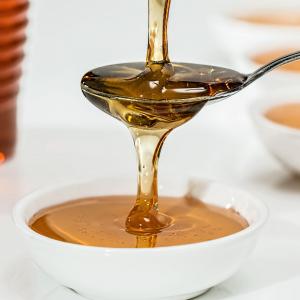
There are many syrups available which can be used to replace sugar as a sweeteners including, rice syrup, date syrup, agave syrup (from cactuses) and maple syrup.

Windmill Organics, Crazy Jacks, Suma and Essential all make some of these products. According to health campaigner and health food expert Stephen Morley, rather than glucose or sucrose, the 'sweetness' found in these syrups is mainly from other sugars such as fructose or maltose which are more complex carbohydrates that the body absorbs much more slowly and thus don't require as much insulin — the chemical that triggers our sugary 'highs and 'lows' — to break it down.

Instead these sweeteners raise blood—sugar levels gently, keeping sugar cravings at bay and helping to burn, rather than store, fat. Some of these syrups also taste a lot sweeter than sugar so consumers do not need to use as much and can therefore cut their calorie intake. Unlike refined sugars, fruit syrups also retain other nutrients.

natural alternatives to Sugar


Company Profiles

Silver Spoon, British Sugar and Billingtons
are all owned by Associated British Foods (ABF), which also owns a number of other subsidiaries including Primark, featured elsewhere in this magazine.

ABF is owned by Wittington Investments, which is the investment vehicle of the Weston family. The company receives criticisms in most of Ethical Consumer's categories. Those relating to British Sugar include a Habitats and Resources mark from criticism in Ecologist magazine, amongst others, for its involvement in the production of bio—fuels.

It was also the target of campaigners, back in 2004, protesting against its lobbying for the unfair EU sugar rules.4

Campaigners were asking the company to cease blocking reform of the regime which was, until recently, heavily biased towards big companies. It was also accused of dumping excess produce on majority world markets further damaging the livelihoods of local producers.


Windmill Organics
gains a positive mark for only selling organic products.


The Co—operative Group
own—brand sugar is made by Fairtrade company, Nirvana Sugars. Nirvana's ethiscore is 15, Co—op's is 8, so our database calculates the brand's score as 13.


Crazy Jack's
was bought by Milk Marque, formerly the Milk Marketing Board, which has now changed its name to Community Foods Group Ltd and is owned by 12,000 UK dairy farmers. Its organic and Fairtrade sugar should have just become available in independent health and wholefood shops as we go to press.


Equal Exchange
is a workers' co—operative which sells only fairly—traded goods. With the exception of honey, the company does not retail animal products such as meat, eggs or dairy, and sells mostly organic products, making it one of the most holistically ethical companies we have on our entire database.


Essential Trading and Triangle Wholefoods (Suma)
are both workers' co—operatives.

Suma, in addition, has the BUAV's Humane Cosmetics standard on all of its relevant own—brand products.


The West Indies Sugar & Trading Company
is a joint venture between the the Barbados sugar industry (through the Barbados Agricultural Management Company Ltd), Goddard Enterprises Ltd, a long established family company in Barbados, and minority UK interests.

It was established as part of a series of measures to support the island's sugar industry which is threatened by a recent reduction in EU subsidies.


Steenbergs Organic
sells only organic products. It sells speciality sugars such as rose, cinnamon, lavender and chai sugars, thus explaining its higher prices.


Tate & Lyle
also makes sugar by—products such as molasses used in animal feed and citric acid, glutamate, and starches used in foodstuffs and packaging.

The company also uses grains, wheat, and corn to make ethanol (used as an alternative fuel). In 2007, the company ceased producing sugar from beets after reviewing the impact of the EU sugar regime.


Supermarkets
all receive boycott references due to the Boycott Israeli Goods Campaign.


Price Comparison

Price comparison for Sugar

References

1 http://news.bbc.co.uk/1/hi/business/4122480.stm, 23/06/05
2 Sugar and Artificial Sweeteners — UK — January 2007 — Mintel Report
3 www.babyandkidallergies.com viewed 04/02/09
4 New consumer:January/February 2005 (issue 16)

Navigate To: