Biomass Boilers and Burning Wood for Heating

What are biomass boilers and are they sustainable?

Dr Mary Booth from Partnership for Policy Integrity shares her views on biomass boilers and whether burning wood for heating is environmentally friendly or carbon neutral.
 

Burning wood and other plant matter for heating

What do people mean when they talk about biomass boilers?

‘Biomass’ is any organic matter used as fuel. Biomass boilers typically burn logs, wood pellets or briquettes, although some specialised units can also burn other types of biomass such as miscanthus, a tall perennial grass. 

Wood-burning boilers are less common than wood-burning stoves that heat space directly, but the technologies have issues in common, as burning wood impacts forests, the climate, and air quality.

Biomas boiler logistics

Wood boilers can be installed inside or outside a building. 

Most wood boilers require fuel to be quite dry because moisture decreases combustion efficiency, increases pollution emissions, and can degrade boiler components over the long run. When harvested, wood has a moisture content of around 50%. Wood pellets are dried down to about 10% moisture content by burning wood or natural gas during the pellet manufacturing process. Domestic and imported firewood logs sold in the UK may be pre-dried in a wood- or gas-fired kiln, but if not pre-dried, logs usually require one to two years storage under cover to allow natural air-drying to take moisture content down to around 20%. 

Wood boilers are more high-maintenance than other types of boilers, because unless pellets are automatically fed from storage, they are added manually, and log-fuelled boilers always require manual feeding. Most boilers also require periodic ash removal.

Forest impacts of burning wood

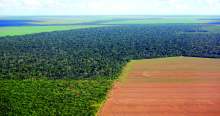
Wood pellets and briquettes made from ground-up trees, and sawdust from wood product manufacturing, as well as wood logs, can be produced in the UK or imported. 

Large wood-burning power plants in the UK (such as Drax in Yorkshire) have been criticised for burning wood pellets manufactured by logging native forests of Canada and the United States

Suppliers of imported pellets and logs for small-scale heating boilers have also been found to sometimes log rare European forests as, for example, was found by an investigation into Romanian wood pellet manufacturing. 
What are the climate impacts of burning wood?

It’s well-known that burning wood in a boiler or stove emits as much or more carbon dioxide (CO2) per heat generated as burning fossil fuels. 

Thus, claims that burning wood is “sustainable”, “carbon neutral” or has “low” or “zero” CO2 emissions is usually based on the idea that growing trees take CO2 out of the atmosphere, offsetting the CO2 emitted by burning. However, burning wood emits CO2 much faster than trees regrow, thus burning wood always increases the amount of greenhouse gases in the atmosphere at least over the short term. Numerous studies have found that it can take decades to even centuries for forest growth to offset that impact. Even certified “sustainable” biomass still adds CO2 to the atmosphere. 

The Intergovernmental Panel on Climate Change (IPCC) warns that biomass should not be considered carbon neutral even when biomass is thought to be produced sustainably. The Sustainable Biomass Program, a major pellet certifier, has itself clarified that “an SBP claim should not be misrepresented as a guarantee of carbon savings, nor should it be associated with claims of carbon neutrality” or even that biomass delivers carbon savings compared to fossil fuels.

Do biomass boilers contribute to air pollution? 

Biomass boilers tend to emit much more particulate matter and other air pollution than fossil-fuelled boilers. 

While the technology has improved and modern boilers emit less than older units, burning wood increases pollution, often to unsafe levels, both inside and outside the home. Wood-burning is one of the largest sources of air pollution in the UK, and wood heating is prohibited in some areas for this reason.

What to do about using wood and biomass for heating?

In some areas, burning wood for heating can still make sense. 

The type of boiler or stove purchased can make a large difference to the amount of wood burned and the resulting emissions of air pollution. 

But burning biomass should never be represented as “clean” or “carbon neutral.” 

Photo of Mary Booth's head and shoulders

Partnership for Policy Integrity

The Partnership for Policy Integrity uses science, litigation, policy analysis and strategic communications to promote policies that protect climate, ecosystems, and people.

Dr. Mary S. Booth received her PhD in Ecology at Utah State University, focusing on biogeochemistry and plant ecophysiology. She founded the Partnership for Policy Integrity in 2010 and now directs PFPI’s science and advocacy work on greenhouse gas, air pollution, and forest impacts of biomass energy.

Find out more from the PFPI website.