Supply chain policies that protect workers’ rights

Jasmine Owens looks at what companies can do to meaningfully support worker welfare in their supply chains, and shares examples of companies with strong approaches.

Ethical Consumer has rated thousands of companies on what they do to ensure that workers in their supply chains are treated fairly. While many companies claim to have supply chain policies that uphold worker welfare, lots of this is box ticking and doesn’t actually mean much.

For the detectives among you who have tried to assess a company’s supply chain policies, you probably encountered popular industry lexicon like auditing, SMETA and Sedex, or GLOBALG.A.P… but after reading all this information it’s likely you were still left furrowing your eyebrows – what does it actually mean for workers?

Companies with genuinely effective approaches to protecting the rights of workers in their supply chain can explain it in simple terms, and readers can easily understand: “Oh, that’s how they do it.”

Below, we list six companies who have taken effective steps to create positive and fair supply chains. 

But first, what does a supply chain look like? Here's a typical example for a t-shirt for a big fashion chain.

A typical big fashion brand’s supply chains

Take a cotton t-shirt sold by a big fashion brand. That brand likely paid a garment manufacturer, which paid its employees to make the t-shirt on a sewing machine. The garment manufacturer is therefore a “first tier” supplier to the brand, because the brand buys from it directly.

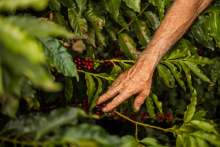
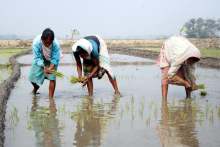
Then there are many more tiers. The garment manufacturer probably bought the material it used to make the t-shirt from a company that processes raw cotton into fabric cotton suitable for clothing. And that processing company might have bought the raw cotton from a different company whose workers pick raw cotton in the fields.

And the t-shirt is only one product of the fashion brand’s products – to find it on the hanger you’ve walked past faux leather jackets, bags, perfumes and more… all of these products have their own supply chains.

The supply chain of just one fashion brand can stretch across continents and rely on thousands of workers. 

Signs of an ethical supply chain

Company supply chains vary greatly, and as such, there is no silver bullet or ‘perfect template’ for how to manage a supply chain in a way that ensures workers’ rights are respected.

Some companies buy only one raw ingredient from a single supplier, whereas other companies buy hundreds of thousands of products from thousands of suppliers around the world. Their supply chains therefore look very different, and they need to take different steps to address workers’ rights risk.

What matters is that the company has genuinely considered the risks in the sectors it operates in, and describes the practical steps it is taking to reduce risks.

The following indicate that a company is taking meaningful steps to ensure the rights of workers’ in its supply chain are upheld. These don’t guarantee that workers’ rights abuses aren’t occurring in the supply chain, but they certainly make it less likely.

1. It publishes its suppliers’ names

Every company knows which suppliers it buys from (at least its first tier suppliers), and it costs nothing to publish a list of these online. Publishing this list means the brand’s reputation is on the line if abuses are found at any of these suppliers. This should motivate the company to take a real interest in the working conditions at its suppliers, and also means it can’t get off scot free by jumping ship if abuses emerge.

This transparency is a good sign, and has become commonplace in the clothing sector, with many big brands publishing complete lists of first tier suppliers and beyond. We hope to see companies in other sectors following suit.

2. It incorporates supply chain workers into the company

Companies that are set up as co-operatives might invite suppliers to become members, meaning they have a say in the running of the business. Or, they might bring more stages of the supply chain inside the company – also known as vertical integration. This means that growers end up being direct employees of the company, instead of workers in their supply chain, meaning they’re likely to have more benefits and the company can more easily monitor working conditions.

3. Supporting workers is its core ethos

Some companies exist primarily to support farmers or workers who, without the company, would probably be working in much harsher conditions or unable to find a market for their produce at all. If the company is non-profit and its mission is genuinely to support the growers or manufacturers, that’s a sure sign that you’re buying from a company that values workers and their welfare.

4. It has strong fair trade credentials – and doesn’t skip the detail

There are many issues and limitations of fair trade certifications. But when 100% of a company’s products are certified fair trade by a named certifying body, and it provides some detailed additional narrative about workers’ rights, this is a promising sign that the company is taking workers’ rights seriously. 

Additional narrative could include providing details about worker pay – for example, saying workers earn double the Fairtrade International rate, or quadruple the local minimum wage. Some companies can explain in significant detail how they make sure workers receive this fair pay, why it’s important, and even why they go above and beyond requirements of certifications. 

Examples of brands with ethical supply chains

Based on Ethical Consumer's detailed research and ratings, here are some examples of brands with ethical supply chains in the world of chocolate, tea, coffee, fashion, olive oil, soap and outdoor clothing.

1) Paccari

This chocolate brand is one of a tiny number worldwide that doesn’t just ship in cocoa beans and then process them. Usually, the country where the cocoa is grown only receives a small amount of farming income, and then the more profitable processing and packaging stages are carried out in richer places like Europe or the US. Ecuadorian company Paccari, however, manufactures and packages the chocolate in Ecuador, where the beans are grown, helping to keep more of the total value of a chocolate bar inside the country of origin.

Child labour is a major issue in the cocoa sector. Farmers are often not paid enough to live on, so they have to keep children home from school to work on the farms, in dangerous conditions – with children as young as five using machetes to harvest cocoa. Paccari works directly with local farmers through "direct trade", avoiding middle men, and says it pays farmers a significant premium over market and fairtrade cocoa prices. Higher payment makes it less likely farmers will have to make their children work, too.

Representative of Paccari, Juan Andres Santelices, published an opinion piece with Ethical Consumer arguing that Fairtrade isn't good enough.

Rated by Ethical Consumer: 2025 chocolate shopping guide.

2) Revolver Cooperative

Revolver sells tea and coffee under the ‘Coop Coffee’ and Revolver brands.

It’s a multi-stakeholder cooperative and invites farmers to become members of the cooperative, “giving them an active voice in our operations.” It says this approach is more equitable, and strengthens its partnerships, in comparison with having a standard buyer-supplier relationship.

It aims to amplify producer voices to support human rights and ethical trade. For example, it organised for Malawian tea producers to travel to Parliament, where they talked directly with companies in the UK tea sector.

Nearly all of its products are certified Fairtrade, and its non-certified products are grown by a “close-knit network of cooperatives and dedicated smallholder producers” and they receive a premium (an extra payment on top of the cost of the product), to support community initiatives.

Rated by Ethical Consumer: 2025 Tea and coffee shopping guides

3) Nudie Jeans

Nudie Jeans publishes a full list of all its suppliers every year on its website, and on the supply chain transparency platform Open Supply Hub, making it easy to trace suppliers to the brand. This shows the number of workers, how many years they’ve sourced from, if it’s been visited that year by a Nudie’s employee and whether the supplier has “workers committees”.

This is well above and beyond what is normal for apparel companies, and it opens Nudie’s up to scrutiny from journalists, campaigners, and possibly workers themselves – because the transparency makes it much easier to link the supplier to the consumer-facing brand it is supplying.  

Its denim is organic, or recycled, which avoids workers having to deal with the health effects that can come from using toxic chemicals.

Rated by Ethical Consumer: 2023 Jeans shopping guide

woman in  tree olive oil from palestine
Olive harvest, Palestine. Image provided by Zaytoun and reproduced with permission.

4) Zaytoun

UK-based social enterprise Zaytoun was set up specifically to support the resilience of Palestinian farmers making products like olive oil, dates, and soap. It has built up long-term relationships with a range of Palestinian suppliers, such as Canaan Fair Trade, Nablus Soap Company, the Palestine Fair Trade Association and West Bank Salt Company.

It features interviews with workers who harvest the products, or work at the supplier company, on its website – where they express the value of keeping producing in spite of all the obstacles created by the Israeli occupation. 100% of Zaytoun’s profits are “reinvested into furthering [its] mission”.

Rated by Ethical Consumer: 2025 Olive oil shopping guide

5) Dr Bronner’s Magic Soaps

Dr Bronner’s sells healthcare and beauty products like soap, lotions, toothpaste and lip balm. Most of these are fair trade (under Fair For Life certification), organic, or both.

Dr Bronner’s names the suppliers of its raw materials on its website, along with a description of the history and nature of its partnership with them. For example, coconut oil from Samoa. Coconuts are largely grown by smallholders and are often associated with poverty. One reason is that the crops take years to establish, and once farmers have invested in them they have no choice but to keep harvesting them, even if they’re receiving very little money for their coconuts. This tends to lead to low prices, and most coconut farmers are very poor.

In 2016 Dr Bronner’s formed a joint venture with a Samoan producer of conventional coconut oil. This supports farmers to achieve organic production status, meaning the farmers could raise their prices as organic produce sells for higher rates.

While it sources raw materials from abroad, most of Dr Bronner’s products are manufactured in-house, shortening the supply chain and making it easier for the company to uphold high standards for worker welfare.

Rated by Ethical Consumer: 2026 Soap guide

6) Paramo Ltd

Outdoor gear, sportswear, and fleeces are among the clothes that Paramo sells. 80% of Paramo’s clothing is manufactured at a supplier company called Miquelina, in Colombia. Miquelina was set up to support women who have “for various reasons had to accept jobs that go against their human dignity”. Miquelina claims to provide “dignified salaries” and safe working conditions for 200 women, many of whom are single mothers with experience of poverty, displacement, trafficking or little education and work experience. 80% of its products have the World Fair Trade Organization label, and it has a detailed supplier code of conduct that applies to all its products.

In 2022 Páramo’s owner turned the company into an Employee Owned Trust (EOT), meaning all employees have a meaningful stake in the business. It brought the management of the Miquelina factory into the Paramo business, so workers at the factory could also receive a stake in the EOT’s future. Doing this also helps give Paramo more oversight of conditions at the factory, and helps ensure the relationship with Miquelina would continue for years to come.

Paramo publishes the name of all its direct suppliers on its website.

Rated by Ethical Consumer: 2024 Outdoor clothing shopping guide

7) Indilisi

Indilisi, which is one of our Community Best Buy companies, is designed with workers’ rights at its core. Founded by People Tree’s Safia Minney, Indilisi partners with and sources from social enterprises who work to Fair Trade principles. Alongside Fair Trade price guarantees, the company also ensures that its buying cycles and advance payments provide suppliers with a predictable and secure source of income.

Indilisi’s material choices, which are all certified organic, also support local craft skills such as handweaving. It produces in small batches to avoid overproduction and waste. Alongside this, the company campaigns publicly for a Just Transition in the fashion industry, and for the equitable distribution of benefits in favour of workers.

Rated by Ethical Consumer for our Community Best Buy scheme in 2026.

Special mention… Cafe Rebelde Zapatista

We’ve snuck in a 7th brand, another coffee company: Cafe Rebelde Zapatista. Buying directly from the people who make the product is by far the best option, cutting out complex supply chains altogether.

The Zapatista autonomous community in Chiapas, southern Mexico, manufactures its own coffee made by Zapatista people and other local communities, and sells it worldwide via solidarity retail networks. For example, in the UK Cafe Libertad Kollektiv and Essential Trading sell Zapatista coffee under the Cafe Rebelde Zapatista brand.

What about the supply chains of large companies?

The strong examples above are all medium or small companies. This goes to show how smaller companies often are the best choice if you want to feel more at ease with your purchases, and to worry less about the conditions of the people who helped make your products.

Big companies often come with added complexities when it comes to knowing how workers are treated in the supply chain – they might sell thousands of products, with parts sourced from tens of thousands of suppliers all around the world, so it’s difficult to monitor everything.

But lots of big companies don’t even do the bare minimum. For example, most don’t even require their suppliers to pay workers a living wage, instead only stipulating that the legal minimum wage must be paid – which is often extremely low, if there is a minimum wage at all. 

How can we improve workers’ rights in supply chains?

There are lots of meaningful steps companies can take to increase the likelihood that workers in their supply chains are earning a decent, dignified living.

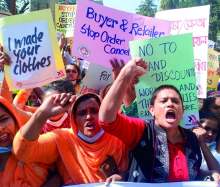
1) Avoid brands linked to exploitation – and be vocal about it. By refusing to buy from brands with poor policies and practices, emailing the company with your concerns, and posting about it on social media, you’re showing customers care about how workers are treated. 

2) Support brands with strong practices. It’s often more expensive for companies to pay care and attention to what’s happening in the supply chain, pay for certifications, and build close and meaningful relationships with suppliers. Your purchases can help keep companies that are trying to do this afloat. 

3) Join campaigns. Get involved with campaign groups like Labour Behind The Label, Make Amazon Pay and more.

Ethical Consumer features lots of campaign groups in our magazine so you can learn about the latest actions tackling workers’ rights abuses.

4) You can use our ethical score tables to find out about companies’ approaches to worker welfare before buying from them. Our workers rating evaluates the policies and practices a company has to protect workers in its supply chain, with each company getting a score out of 100. This way you can support companies with strong practices, and avoid those that are most complicit in exploitation.

5) You can also sign up to our free weekly email newsletter which features our latest articles, giveaways by Best Buy brands, and keeps you up to date on ethical news.