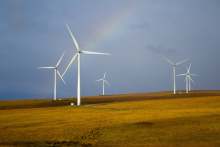



Our guide to ethical energy supplier cuts through the greenwash so you can select a provider to help you play your part in the energy transition.
We look at the most ethical and green energy suppliers. The guide has rankings for 17 UK energy companies, with best buys and recommended brands, plus which brands to avoid and why.
Read more
With the need to transition to renewable energy clear, how do green energy suppliers fare? Should you switch to a green tariff now? And what green steps can consumers take to lower energy bills?
What impact is the Iran war having on energy prices?
Since Israel and the US began bombing Iran in February 2026, global energy prices have significantly increased. In the UK, the impact is already being seen in high petrol prices, and are likely to be followed by rising energy bills.
Israel has attacked Iran’s largest gasfield, while Iran is also bombing energy infrastructure in several Gulf States due to the countries’ alliances with the USA. However, the key cause of rising energy prices is Iran’s move to block the Strait of Hormuz – a sea passage between the country and the Gulf, which is one of the largest oil shipping routes worldwide.
Twenty percent of the world’s oil and liquified natural gas (LNG) previously passed through the Strait. But since the war, the number of ships taking the route has dropped from well over a hundred a day to just a small handful.
As a result, the research organisation Cornwall Insight estimates that for UK businesses, electricity costs have increased by between 10% to 30%, while gas prices have soared by between 25% and 80%.
Why did energy bills increase so much in 2022 and 2023?
It is not the first time energy costs have rocketed in recent years. Household energy bills soared during the peak of the energy crisis in 2022 and 2023, reaching over £2,500 a year for many UK households in early 2023. Prices are now considerably lower than that peak, but they remain 50% higher than in the summer of 2021, before Russia’s invasion of Ukraine.
The high costs were caused by soaring gas costs: at the worst point, wholesale gas prices increased fourfold over a twelve month period, and they still remain roughly 1.5 - 2 times higher than 2021 levels.
Russia’s invasion of Ukraine was a significant trigger for the crisis, as Russia had long been the world's largest natural gas exporter. But gas costs were already on the rise before the invasion.
Gas is traded around the world, imported from country to country. This means that prices are linked to global supply and demand, and vulnerable to volatile world events (such as Russia’s invasion, and Israel and the USA bombing Iran). In the years before Russia’s invasion, demand for gas was already rising in Asia. At the same time, supply was falling as Europe’s gas fields emptied and Russia’s largest gas company cut the amount it sold.
The energy crisis hit UK households worse than any other country in Western Europe because of our over-dependence on fossil fuels. The vast majority (84%) of UK homes still rely on gas for heating. The UK also generates 33% of its electricity from gas, compared to only about 20% in the EU.