
What is community energy?

Communities are creating a radical alternative to our fossil fuel driven energy supply. So what is community energy, and how can consumers support it?

Community energy can give us control over our energy supply. It can create local jobs, lower energy bills and build stronger community ties.

In this article, we look at whether community energy could help address the ongoing energy price crisis. We look at tariffs supporting community energy, and we explore how to become a member of a community energy initiative.  

What is community energy?

Communities all over the UK are leading the way to more sustainable generation and energy use.

‘Community energy’ is when citizens work together to build renewables or support households in reducing their consumption. It often refers to community-led generation projects, for example a wind farm or solar panel project which members of the community part or fully own.

The UK has more than 600 community energy organisations, as of 2025, involved in everything from tackling fuel poverty to providing energy advice and community education.

Energy Gardens, for example, is building community-owned renewable generation and using the profits to create community gardens in London, including in railway stations, and run groups, for example in schools. The group seeks shareholders to invest in solar panels, and uses extra money made from selling the energy to transform space into food growing, educational and other green public spaces.

In many community-energy initiatives, members have a say in how the project is run, and what local or social benefits they’d like to see from it. For example, they may be able to decide where to put the profits, whether to pay them to shareholders, revive the local pub, or set up an electric car sharing scheme.
 

Why is community energy important?

Community energy moves us towards renewable and clean energy generation and use – supporting our transition away from fossil fuels and towards net zero. By giving citizens power and control over the energy system, it can build our resilience and energy sovereignty.

“Community power can help place citizens and communities at the centre of the low carbon transition,” according to the environmental law organisation ClientEarth.

“It involves them directly in energy decisions, and provides them with more control over possibilities to switch to a more sustainable lifestyle. It also focuses on cooperation and development of common goals between citizens, leading to stronger communities overall.”

Crucially, in the UK, these projects offer a way for citizens to drive the clean energy transition at a time when, despite major government efforts, we are still a long way off meeting our renewable targets.

Can community energy help with the energy price crisis?

Energy prices have been soaring in the UK and across the world, driven by high gas prices. Between 2015 and 2025, home energy bills almost doubled.

The crisis is caused by our overdependence on fossil fuels, subject to global price shocks such as those caused by Russia’s invasion of Ukraine, and the USA’s attack on Iran, as well as the ongoing conflict between Iran and other oil majors in West Asia. Transitioning away from fossil fuels is crucial to ensure the future resilience of our energy systems.

Globally, wind and solar energy are now between 40-50% cheaper to produce than energy from fossil fuel powered plants. Some renewable energy projects are expected to be nine-times cheaper than the cost of running a gas power plant at the height of price spikes due to the Ukraine war.

If we build renewable capacity in the UK, we can develop a more stable, cheaper energy supply. Community energy can therefore play a crucial long-term role in addressing energy bills, especially at a time of government inaction. 

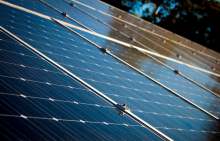
Car park with large solar panel roofing
Local energy options e.g. solar panels in car parks. Image by Kindel Media on Pexels.

Can community energy lower bills?

Community generation projects can also directly tackle volatile energy bills. In Belgium, where energy cooperatives supply to 2% of households, some members paid 50% less than those on the regular market during the Ukraine crisis.

Projects can provide low-cost, clean energy directly to members or locals. Unfortunately though, they can’t offer an immediate fix. Generation projects usually take more than a year to plan and build.

In the UK, their potential to address rising energy bills is further limited by current legislation.

“If you want to buy your electricity from local renewable sources, such as the local school or sports hall that have solar panels on their roofs”, says campaign group Power for People, “you cannot.” Community energy projects are obliged to sell their energy to the UK grid, where it is then sold on to household energy suppliers like Octopus or SSE. This means that prices remain tied to general energy costs, determined by fossil fuels.

While organisations like Power for People are campaigning for this to change, most community energy projects cannot currently provide lower tariffs for the local people they serve. 

Some community energy projects are instead working to help tackle the crisis in other ways. Bristol Energy Network runs information sessions on everything from financial support to how to communicate with your energy company. It has been running up-skilling sessions teaching DIY low-cost energy efficiency measures such as insulation and draught-proofing.

You might want to do an internet search and see whether community energy projects have any such initiatives in your area.

Is off grid energy cheaper?

Some energy projects allow communities to be 'off-grid', meaning that they are not connected to the national grid, the UK's centralised energy source, at all. 

Off grid community energy may be for a single house, a cluster of homes, a small community, or even a whole island of properties. They generate all their own energy and set their own prices.

Of course, setting up this kind of project depends on building and maintaining infrastucture, such as energy storage and backup generators. Although the price is more determined by local factors as opposed to national or global issues, it is not necessarily cheaper.

One example of successful community energy is the Scottish island of Eigg. They have been generating their own renewable energy to power all the homes and businesses on the island since 2008. They use a mix of wind, water and solar power and limit residential properties to 5kW of energy at any one time. This means people are a lot more aware of how much energy is used by different appliances, and are careful with their usage.

Can I get a community energy tariff?

For the reasons explained above, in the UK, most community energy projects cannot directly supply customers, so cannot offer their own tariffs. However, some projects are coming up with innovative solutions.

Energy Local is setting up Energy Local Clubs, which track the energy used by members and make sure that the money from this goes directly to local community generators. In return, customers pay the price of the local renewable production. The organisation is focused on local energy supply, so only neighbours of generation projects can currently get involved. But if you’re a member of a community energy project, or are considering setting one up, this could be a great model to ensure that local households can benefit.

Some more conventional energy tariffs support community generation too:

  • Good Energy states that it buys directly from community generation projects, thereby supporting their work and expansion.
  • Energy Co-op also offers a Community Power tariff in partnership with Younity that is “100% powered by community-generated green electricity projects.” The renewable energy is purchased from Community Energy groups by Younity within an agreed Power Purchase Agreement mechanism. Younity also provide funding for new renewable energy projects to plug the initial funding gap for much needed local renewable energy generation. 

What happened to Ripple?

Ripple was an energy company that allowed consumers to invest directly in new wind farms, and become part of a consumer energy co-op. The returns from your investment were taken directly off your energy bill. When energy prices shot up, so did the savings made by Ripple members. 

Sadly, Ripple announced in March 2025 that it had gone bust, and closed down shortly after. Customer shares were transferred to the ethical investment platform Ethex, and most customers are still receiving payments in this way for their investment. 

How can I support community energy?

There are several options if you want to support community energy, including switching provider if appropriate.

1. Support a ‘Local Energy Bill’

Campaign organisation Power for People is leading the charge for policies to support community energy. The group has written a ‘Local Electricity Bill’ laying out demands. The Bill would establish a Right to Local Supply, and would make the costs of setting up and running a local project supplying to local people proportionate to the scale of generation.

Following years of pressure, the government made a public commitment in 2025 to allow companies, including community energy projects, to sell locally – one of Power for People’s key demands. Now campaigners are calling on ministers to end delays and deliver the promised reforms. 

You can sign up to support Power for People’s campaign on its website. They’ll let you know when they need support, like writing to MPs or signing petitions. 
 

2. Join a community energy project

Community energy initiatives are always looking for new members to provide financial and other support.

The easiest way to get involved is to buy shares, if you have some cash to spare. You’ll usually get a good return on your investment too. (Check what is promised by the individual project).

Energy4All promotes regular share offers from projects, with initial investments usually starting at £100. You can also invest in some community energy projects through Ethex, which provides ethical investment options as well as innovative financial ISAs.

If you want to offer your time or organisational support, check out community energy projects near you. Community Energy England has a great map of projects in England and Wales, or you could do an internet search for those near you.

3. Set up a community energy project

The UK will need more and more community energy projects in years to come. Why not put your time and energy into setting up your own? Community Energy England has a how-to guide.

Useful resources for new and existing projects include:

4. Switch to a supplier supporting community energy

Some more mainstream suppliers are taking meaningful steps to support community energy. Good Energy is a one option.