Barclays urged to stop investing billions into animal cruelty and deforestation

Ethical Consumer hears from global animal welfare charity, World Animal Protection, which is urging UK high street bank Barclays to stop funding animal cruelty, and to stop investing in global meat producer, JBS. 

Barclays is the biggest global funder of global meat producer JBS, investing the equivalent of £5bn between 2015 and 2022 through loans, investments and credit facilities. Barclays’ ongoing investments in JBS shows how the bank continues to profit from animal cruelty. Barclays earned around £1.3bn from financing JBS between 2018-2023.

The British public do not support these investments. A poll by World Animal Protection of 4,000 UK consumers conducted between February and March 2025 showed that more than 75% of people were concerned about Barclays financing JBS. Over 80% thought banks such as Barclays should be held more accountable for their role in financing factory farming.

In the UK, JBS owns Pilgrim’s and Moy Park whose factory farms provide around 25% of UK processed chicken

JBS is also behind supermarket products Fridge Raiders, Richmond and Vivera.
Conditions for the JBS animals

Each year, JBS farms confine an estimated 4.8 billion animals in squalid conditions. Their cows live in their own waste. Their piglets have their tails cut off without pain relief. Their chickens have less than the size of an A4 piece of paper to move and are bred to grow so quickly, they can barely support their own body weight. These sentient animals never feel the grass beneath their feet.

The only way to keep these animals alive within these vile conditions is by pumping them full of antibiotics. This increases the risk of antibiotic resistance within humans. The World Health Organisation marked superbugs as one of the greatest threats to human health, estimating 10 million deaths per year globally by 2050.

Animals on JBS farms are fed on a diet of cheap soya-based animal food. This is sourced from soya cops created by clearing vast swathes of rainforest in the Amazon and the Cerrado. The clearing of the forest releases the carbon stored by these trees back into the atmosphere and reduces the earth’s capacity to absorb CO2. Soya is the only type of plant grown on these fields, which damages soil health and makes it inhabitable for animals. This reduces biodiversity. An estimated 80% of these soya crops are used for animal feed rather than to feed humans. This provides a stark picture of how ineffective these factory farms really are at feeding the world.

Deforestation, JBS and Barclays

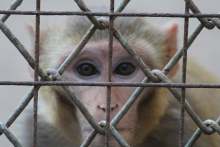
The massive areas of rainforest destroyed to cultivate animal feed belong to a variety of beautiful animals including maned wolves, monkeys (such as the black capuchin), eagles and parrots. With every tree felled, these animals lose an important part of their home, and their risk of extinction increases. Footage from World Animal Protection revealed maned wolves drowned in irrigation channels dug by factory farms, in their own habitats.

In September 2024, JBS was associated with the clearing of over 18,000 hectares of rainforest – roughly the size of Glasgow.

Yet, Barclays continues to pour monstrous investment into JBS. This is completely incompatible with the bank’s commitment to support the global effort to end deforestation and its aspirations to become net zero. World Animal Protection calculated that JBS alone is responsible for annual greenhouse gas emissions equivalent to 13.9 million cars.

Lindsay Duncan, World Animal Protection, UK Farming Campaign Manager said, “It’s hard to take Barclays’ commitment to net zero and no deforestation targets seriously when, year on year, the bank continues to plough millions into JBS.

Duncan called for Barclays to take responsibility for its investments and stop funding animal cruelty. “Billions of animals are suffering on JBS factory farms every year,” she said. “Rain forests, home to endangered animal species, are felled at alarming rates to prop up the growth of JBS’ factory farms – both abroad and in the UK. We urge Barclays to stop investing in JBS.”

Take action against Barclays and JBS

To call on Barclays to stop investing in JBS, please sign World Animal Protection’s petition.

Watch World Animal Protection's video to support the campaign, with footage of animals suffering projected onto Barclays buildings across London, as well as on Shoreditch High Street.

How ethical is JBS and its subsidiaries?

A recent Ethical Consumer screening of JBS subsidiary Rollover revealed an ethical score of 15 out of 100. 

This low score was mainly attributed to the activities of the parent company, JBS. 

The lengthy list of criticisms against JBS included buying 9,000 cattle from one of Brazil’s biggest deforesters, and a groundbreaking filing by the New York Attorney General on greenwashing by JBS

JBS was also found to have subsidiaries in tax havens, had been embroiled in a bribery scandal in Brazil, and globally fined more than $200m for employment, environmental, safety and competition-related offences since 2010.