Our experience as seasonal workers on UK farms 

In this guest article Elina and Mira, two workers who migrated to the UK on seasonal visas, describe their experiences harvesting produce on three UK farms. 

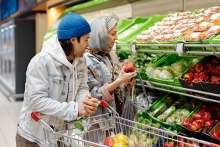
Some of the fresh products they harvested were destined for supermarkets like Tesco, Asda and M&S.
 

We arrived in the United Kingdom from a Central Asian country earlier in 2025, as a team of 12 people. Upon arrival, we were divided into groups and assigned to different farms. 

The first farm

Our first place of work was a farm in the south of England, where some of us spent three weeks harvesting daffodils. 

We would like to highlight the positive aspects of this farm, particularly the respectful attitude toward workers and the satisfactory living and working conditions. We were left with only positive impressions from that farm. However, since the flower-picking season was coming to an end, we were informed that we would be relocated to another farm once the season concluded. 

The second farm

Soon after we arrived at a farm in Scotland. From the very first days, we began facing serious difficulties, which manifested in extremely poor living and working conditions. Despite a gruelling 12-hour journey, we were immediately made to do orientation and sign contracts, without being given time to rest or have a meal. The contracts were officially signed the following day, but we were not given a copy of it. 

Shortly after, we encountered violations of basic human standards. Most notably, we experienced disrespectful treatment from farm supervisors. This included overt rudeness and degrading behaviour toward workers from Central Asian countries. 

For example, instead of addressing us by name, they would shout “Hey!”, which we found offensive because they would only address workers from Central Asia this way, not European workers, who were addressed by name. We immediately reported this to our supervisor, but she dismissed our concern and subsequently we began facing repercussions, such as our working hours being reduced to the very minimum. 

We also faced complete neglect regarding basic living needs. Seasonal workers are not able to rent their own house; our only option is to live in caravans provided by the farm. These caravans are very small; two people are placed in a tiny room, which is not even spacious enough for one person. We pay £74.62 per week, despite the caravan lacking basic necessities. We were housed in filthy, cold, and outdated caravans and there were hidden costs involved in addition to our weekly charges. A 47kg gas cylinder used for heating the caravan would run out in just one week, even when used sparingly. We were informed that the cost of purchasing further gas and electricity would be entirely our responsibility – a fact that was never mentioned to us by our recruitment company/sponsor. A single gas cylinder costs £70. 

A serious safety violation involved the absence of stairs at the caravan’s emergency exit, which led to one of us falling and getting injured while cleaning. 

The laundry facilities were only open on weekdays from 5 p.m. to 7 p.m., with no possibility to wash clothes on weekends. Groceries had to be bought in a town located an hour away, with the journey costing at least £8.50 per person, which we had to cover ourselves. 

Personal protective equipment (PPE), such as work gloves, was also not provided by the farm. We were forced to buy all necessary work clothing ourselves. After working on the farm for about three weeks, a portable toilet was finally provided in the field. Before that, we had no choice but to relieve ourselves wherever we could, since the allocated break time was insufficient to access far away facilities. 

All requests for even minimal assistance from management were categorically refused. After working in the polytunnels where tomatoes are grown, we began to experience allergic reactions and sunburn. We requested to be transferred to another position, such as packaging in the packhouse. However, this was denied. 

Given all of the above, we believe that the living and working conditions at this farm are unacceptable. These conditions violate not only labour regulations but also basic human rights. 

Faced with these challenges, we reached out to our Scheme Operator/sponsor, which had placed us at this farm. We hoped for a swift and effective response. Unfortunately, the agency ignored our request entirely. 

In this difficult situation, we finally contacted the Worker Support Centre, whose representatives provided assistance in resolving our issues, such as helping us escalate issues to enforcement bodies and request a transfer to be placed with a different employer, as well as moral and psychological support. 
The third farm

Finally, after waiting a month for a transfer, we were moved to another farm in Scotland. While the work here is not easy, compared to our previous experience the situation is considerably better. Although the caravans are old, they are fully equipped, and work is organised more efficiently. However, a significant issue remains: the lack of proper attention to workers’ health. 

For instance, when one of us fell ill and requested medical attention twice, she was unable to see a doctor. The manager stated that while he could take her to a hospital in the nearby city, she would need to return by taxi and cover the cost of medication herself. This raises questions about our right to access healthcare, which was not explained to us (in Scotland all seasonal workers have the right to access healthcare, however multiple barriers prevent us from doing so, including being given the wrong information), but also the purpose of national insurance contributions from our salaries if we cannot access timely and free medical care. 

Another major drawback is the farm's remote location, which makes it very difficult to travel. The nearest bus stop is 5 km from the farm. 

At this farm, the work includes planting, harvesting, weeding, cutting, sorting, and packaging potatoes, broccoli, and various types of cabbage. The farm’s main partners are major retailers such as Tesco, Asda, and Marks & Spencer (M&S). We often see our produce on the shelves when shopping at Tesco. 

In terms of how the farm owners treat workers, we must commend their democratic and respectful attitude, something that was sorely lacking in the previous farm. 

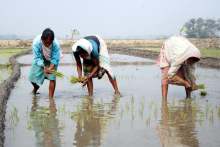
Field of cabbages
Image by Anik Deb Nath on Unsplash

Worker-centred support is needed for seasonal workers 

Other team members who arrived with us faced the same problems: hostile treatment from management and a lack of decent living and working conditions. 

Having endured all the moral, psychological, and physical hardships ourselves, we believe independent worker-centred support must be accessible to all workers. 

In conclusion, we would like to express our sincere gratitude to the representatives of the Worker Support Centre, who did everything possible to help us, including providing information, advice and support to escalate issues to enforcement bodies and emotional support. 

Standing in solidarity with people working seasonally on our farms

Here the Worker Support Centre (WSC) introduces its work. 

WSC is proud to partner with workers in seasonal agriculture, including Elina and Mira. We worked together for immediate and longer term change. Every year, hundreds of workers share similar experiences with the Worker Support Centre. 

When workers feel unsafe or exploited, we know the system is failing them. We stand with those whose voices are too often ignored, making sure their experiences shape everything we do. We believe that everyone should be valued, respected and safe at work – no matter our job or nationality. Yet we know that many people aren’t treated fairly at work, and that exploitation happens when power is stacked against us. That’s why we support people who come to the UK to work seasonally in our farms.

Up to 45,000 people travel to the UK every year to pick fruit and vegetables and to work in poultry facilities. Most live on farms and have limited contact with people outside the workplace. Risks of labour abuse and exploitation are high. 

Since 2022 WSC has partnered with the people who travel to farms in Scotland. They have shown us the huge sacrifices people make to put food on our tables, and the powerful potential for change when we collaborate. We work together to secure their rights, prevent abuse and influence UK government policy for lasting change. 

In 2024, WSC’s caseworkers supported 697 people on issues spanning not being paid for work, getting hospital treatment, and living in unsafe housing. Our Worker Power programme is led by staff with experience of work in seasonal farming, and brings workers together to socialise, share experiences and collaborate on the changes we want to see.  

Through our outreach so far in 2025, we’ve met more than 500 people working seasonally on farms in Scotland and have collaborated with 50 workers outside work to build a picture of what is going wrong and how we can work together to fix it. 

As the WSC continues to join with workers as the season reaches its close, we invite readers of Ethical Consumer to get in touch, join our movement, follow and contribute to our work.

Get in touch if you’ve a collaboration in mind, or just want to support but don’t know how: Worker Support Centre website