Palm Oil and Consumers

Should we boycott palm oil? We share our advice for consumers. 

Palm oil has been a problematic ingredient for nearly 20 years. Ethical Consumer has tracked the issue, seeking the best consumer responses. Concerns about its damage to forests, climate, people, and endangered species are escalating as the crisis worsens. What can consumers do about palm oil?

A whole raft of initiatives exist to try and solve the problems in the industry. These involve hundreds of companies, international campaign groups like Greenpeace and WWF, huge certification schemes like the RSPO and even some governments and the World Bank.

The trouble is that none of these initiatives appear to be working, with deforestation to meet the growing demand for palm oil showing no signs of slowing down. In April 2019, the UK supermarket chain Iceland announced a ban on palm oil in own brand products showing that, consumer opinion is, if anything, hardening against the idea that palm oil could ever be sustainable. There are also growing criticisms of the RSPO and its 'sustainable' palm oil.
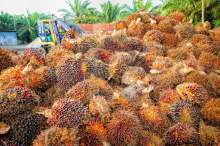

Image: palm oil plantation

What can consumers do?

Ethical Consumer believes avoiding palm oil or choosing products with top sustainability certifications are reasonable responses to the complex issues. Use our shopping guides and palm oil ratings to help you decide. We provide resources to support either approach to this issue, empowering consumers to make informed choices.

We highlight companies which are palm oil free and those that are not, but get best marks for making some progress on the issue. We also incorporate into our ratings external criticisms, such as those from Greenpeace, of companies’ palm oil supply chains. The full details of how we arrive at the rankings appears on our website and, for logged-in subscribers, in the company stories that sit behind the table scores.

The sense of urgency is increasing. A report from Changing Markets published in April 2018 has cast further doubt on the ability of certification schemes, such as the RSPO, to help.

However, the key campaigners in this field – Greenpeace included – are not arguing for a consumer boycott of all palm oil. It is recognised that pressure from western consumer markets is at least driving some environmental standards into the industry but lots of growth is coming from markets – like those in China and India – without similar demands for environmental standards.

Of course, the growing use of palm oil is also heavily linked to the increase in the amount of processed foods consumed in the west. Cooking fresh meals can have multiple benefits such as avoiding fat, sugar, salt as well as palm oil. 

In addition, it is always worth keeping up with the name-and-shame campaigns from the big campaigners like Greenpeace and SumOfUs. Strategically avoiding the worst companies out there will help create pressure in the right place in the short term, and it certainly makes sense to focus on the companies with the biggest market power. Unilever, for example, uses over 1 million tonnes annually and, therefore, its power to affect change is far greater than a company using less.

And finally, acting as citizens as well as consumers is important too. Keeping up the pressure to remove palm oil from, for example, transport biofuels will be a key part of any plan to halt the destruction associated with this most troublesome of crops.

How we rate companies for Palm Oil policy

From 2024, the palm oil category is only used for companies that operate in sectors likely to use palm oil or its derivatives. 

Lowest ratings

If companies demonstrate no or minimal commitment to sourcing sustainable palm oil, or have good policies but have still received serious criticisms for abuses in their palm supply chain, they will receive the lowest ratings.

Highest ratings

Companies will score highest if they don't use any palm oil or derivatives. 

Large companies can also score some of the highest ratings if all palm oil and derivatives are certified by the RSPO, with at least 50% coming from Segregated or Identity Preserved supply chains, they list all their mills and producers, and publish an annual grievance list. And they should ensure none of their producers are among those with the most inadequate ‘No Deforestation, No Peat, No Exploitation’ policies. 

We're a bit more lenient with small and medium companies, focusing much more on whether they are sourcing certified palm and derivatives, or not. 

What brands are linked to deforestation via palm oil?

Greenpeace and other key campaigns work outside the RSPO, naming and shaming companies that fail to ensure deforestation-free supply chains. In March 2018, Greenpeace International released a report, ‘Moment of truth: time for brands to come clean about their links to forest destruction for palm oil’.

It examined progress towards pledges made in 2010, when members of the Consumer Goods Forum (CGF) made a clear commitment to clean up their supply chains by 2020. Greenpeace stated “with less than two years to go until 2020 ... corporate commitments and policies have proliferated, but companies have largely failed to implement them.

As a result, consumer brands, including those with ‘no deforestation, no peat, no exploitation’ (NDPE) policies, still used palm oil from producers that destroy rainforests, drain carbon-rich peatland and violate the human rights of workers and local communities – making their customers complicit in forest destruction, climate change and human rights abuses.

Before publication, Greenpeace challenged 16 members of the CGF to demonstrate their progress by disclosing the mills that produced their palm oil, and the names of the producer groups that controlled those mills. Eight of the global brands did so. The eight who did not initially respond were: Ferrero, Hershey, Kellogg’s, Kraft Heinz, Johnson & Johnson, PepsiCo, PZ Cussons and Smucker’s.

There has been a problem of big brands sourcing certified sustainable palm oil from Indonesian and Malaysian companies which are linked to other companies engaged in some of the worst deforestation. Given the intensity of the problems, Greenpeace is now arguing that consumer brands should only be sourcing from company groups whose entire business is NDPE.

Is palm oil used in biofuels?

Oxfam campaigns against using food crops as biofuels. Their report shows that the recent growth in palm oil demand in Europe is largely due to the increasing demand for biofuels, primarily for transport and, to a lesser extent, electricity generation. 

Table: EU uses of palm oil by sector in 1000 metric tonnes

This led New Scientist to publish an article arguing that “plans to ditch palm oil are missing the real issue: forget food, it’s in your car”. At the core of this problem is the now widely derided EU policy to ensure that 10% of transport energy comes from renewable sources by 2020, with increases in subsequent years.

The European Parliament voted to end subsidies for palm-based biodiesel from 2020, but the vote has no force and the final decision will depend on EU wrangling. The power of the biofuel lobbies in Brussels are enormous and, for those of us in the UK, the issue is further muddied by Brexit.

Are there any alternatives to palm oil?

Commentators note that there aren't clear, scalable alternatives to palm oil in food without causing other problems. Palm oil has a very high yield per acre, and replacement vegetable oils would require much more land.

It is therefore logical that laboratories around the world are trying to find a viable alternative. Scientists from Abu Dhabi claim to have found an algae that “naturally produces large quantities of palmitic acid – the fatty acid that is a major component in palm oil.” And a research team from the University of Bath claim to have produced a palm-like oil from yeast.

However, Greenpeace chief scientist Doug Parr has expressed his reservations with these projects, saying:

“I think you have to be quite beady-eyed about the challenges of getting from the lab to commercial production ... on the sort of scale that’s going to impact the palm oil industry. We shouldn’t imagine for a moment there is a sort of ‘get out of jail free’ card for the tricky corporate and political transition that needs to be taking place in countries where palm oil is a major damager of important forests.”

10 things you need to know about palm oil

What legislation is needed to regulate palm oil?

COP26 pledges

Governments must address deforestation, habitat loss, workers' rights, and climate change from palm oil production. The COP26 pledge to end deforestation in November 2021 saw governments and companies pledge billions to protect forests, including those threatened by palm, but it is non-binding

And with Indonesia backtracking just days after it was announced, the fragility of the commitment is further exposed.

The need to report supply chain emissions

In the absence of legislation, companies are left to choose whether or not to take responsibility for emissions in their supply chains. In our October 2021 Climate Gap Report, we suggested that the first step towards doing this was to report these ‘scope 3’ emissions figures – but also for governments to require companies to do so.

Due diligence

Several countries are adopting ‘due diligence’ legislation to make large companies responsible for various human rights and environmental risks in the supply chains of consumer goods. Such laws could be used to protect against deforestation for palm oil.

France and Germany passed laws in 2017 and 2021, and now the European Parliament has asked the European Commission to submit a similar proposal.

A coalition of groups including the TUC, Amnesty, Unison and Christian Aid are also calling for the UK to follow suit.

You can sign a petition for a UK Due Diligence law on the Corporate Justice Coalition website.

Which companies are being boycotted due to palm oil from West Papua?

Over 90 West Papuan groups call for a boycott of companies profiting from ecocide in the world’s third-largest rainforest until West Papua has self-determination. A recent Indonesian Supreme Court ruling curbed expansion of the Tanah Merah palm oil plantation but did not grant land rights to the Awyu tribe, leaving them vulnerable.

The campaign opens with a boycott of Hershey’s, KitKat, Smarties, Aero, Oreo, Ritz, and Pantene and Herbal Essences.

These confectionery and shampoo brands are palm-oil based and owned by US conglomerates who all source palm oil directly from West Papua: