Climate Gap Report

Ethical Consumer is tracking the UK's progress towards sustainable living through its annual Climate Gap report. 

The Climate Gap report simplifies the Climate Change Committee annual reports and translates the complex detail into clear findings in four impact areas: food, heating, transport and consumer goods. 

This is a critical decade for climate action. Ethical Consumer is tracking progress towards sustainable consumer lifestyles in the UK, and has produced six annual reports so far. 

The Climate Gap highlights the gap from where we are at present, to where we need to be if the UK is to meet its net zero targets.


2026 Climate Gap Report published

Ethical Consumer's sixth annual Climate Gap Report has been published in mid October 2026.

And unfortunately the gap between the UK’s current carbon emissions, and the decarbonisation targets set out by the UK’s Climate Change Committee (CCC) for the year 2030, isn't closing fast enough. 

Our report simplifies the CCC's data on the UK’s progress and helps identify key actions that consumers, businesses, and importantly, governments, need to take to achieve the target reductions.

The CCC stated in 2026 that “The UK Government is not moving fast enough to reduce greenhouse gas (GHG) emissions”, and in particular that if “sufficient progress on electrification is not made in the next year, the 2030 [goals] may become out of reach and there would be significant risks for both the Sixth Carbon Budget and reaching Net Zero by 2050.”

The foreword to the 2026 Climate Gap Report, by Gareth Griffiths, Chief Executive Officer at Ecology Building Society, notes that "Closing the gap isn’t simply a question of effort. It’s a question of power – and of providing the infrastructure, policy and affordability that allows more action, more quickly." He said:

"But we can’t simply wait for the perfect conditions to act. ... Our power is in turning individual action into collective influence. How we vote. Where we spend. Where we save. What we choose to reward. Together, our choices can send powerful signals to businesses and policymakers about the change we expect."


Key observations from the 2026 Climate Gap report

The report contains discussion of our main findings, which include:

  • civil society’s calls for the UK government to communicate honestly about the climate emergency are growing
  • the significant increase in electricity required by data centres needs to be included in the CCC's carbon budgets
  • only two of our 12 indicators on reducing emissions appear to be on track

The climate crisis is a crisis of global injustice, where the world’s richest 1% are responsible for nearly twice as much emissions as the world’s poorest 50%, who feel the brunt of climate impacts despite bearing the least responsibility for causing them.

So the gap between where we are and where we need to be requires systemic changes. 

A big part of this is challenging corporate power, which is something Ethical Consumer is particularly focusing on. See our Crowdfunder campaign for more on this.  

Most indicators are not on track to reach the targets

The Climate Gap report tracks 12 indicators in the area of food, heating, transport and consumer goods. Together these account for about 75% of UK consumer emissions.

According to the available information, only two of the 12 indicators appear to be on track to meet targets for the year 2030, based on the 'Balanced Pathway' suggested by the UK's Climate Change Committee. The targets themselves are also under scrutiny. Read the report to find out more. 

Ticks and crosses against the 12 indicators. Available as text on the page.

Targets appearing to be on track 

  • dairy consumption
  • home heating emissions (but probably driven by high prices)

Unsure

  • meat consumption

Not on track

  • food waste
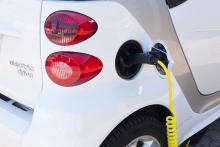
  • heat pump installations
  • home insulation
  • aviation emissions
  • road transport emissions
  • new registrations of electric vehicles
  • consumer goods footprint
  • repair and reuse of consumer goods
  • consumer goods supply chain emissions

The report has detailed information on the 12 indicators, the progress since 2019, and suggested actions and key campaigns to support.

Emissions from big brands are increasing

The Climate Gap Report also looks at the carbon emissions from supply chains of big brands. 

These multinational companies should be reporting on their Scope 3 emissions which captures the emissions up and downstream, so from all the component parts that go into a product's creation, purchase, use and eventual disposal. 

While it's good to see more companies reporting on this over time, emissions from many of them are increasing, not decreasing. 

In the graph below we highlight six global brands whose emissions are increasing.

Bar graph of emissions from six global brands. Text is on the web page.

Increase in emissions

The companies with the biggest year on year increases were:

  • Adidas: 18%
  • Amazon: 19%
  • Asda: 24%
  • Microsoft: 26%
  • JD Sports: 31%
  • Dell: 33%

Our ethical shopping guides have alternatives to these brands.


Further reading

The 2026 Climate Gap report is free to download and contains more detailed discussion on the findings, including individual graphs for each of the 12 indicators tracking progress since 2019, campaign groups to support, and actions consumers, businesses and governments can take for each indicator. 

It's 15 pages long.

Personal and collective climate actions

The report found that across four key consumer areas (food, heating, transport and consumer goods) we are not cutting emissions fast enough.

The full report suggests key campaigns you can support in each area, as well as campaigns for wider reforms and systemic change.  Linking with others with the same aims can help us to feel less overwhelmed, and to achieve bigger things. Tackling the climate crisis requires the institutions and infrastructure around us to be redesigned to make lower carbon choices the norm. Download the report above to find out about key campaigns you can support. 

However, all our individual actions also add up and can have ripple effects. You can read more in our series of climate action articles - see the links below. 

5 climate saving actions in infographic. All info is in the report

We have a range of articles that will help you take steps to reduce your personal carbon emissions. 

Take action where you live and work


Contact your local council

You can see how well your local council in the UK is performing against their net zero ambitions. Go to Council Climate Action to find your council and see how they perform compared with other councils. 

You can then contact your council to praise them on current action (if appropriate), and ask them to do more. 


How to make your workplace greener 

The TUC Greener Workplaces Toolkit is a handbook for workplace climate action. It includes a section for “anchor institutions” such as local authorities or universities, and sections on travel, building upgrades, and planning for future skills needs. It also contains templates such as a survey for greener workplaces and a transport review. 

The aim is to provide the information, tools, ideas, and case study inspiration to start taking impactful workplace and community action to address the climate emergency, future-proof jobs, and negotiate greener and fairer workplaces. 

Many of the suggestions in the book could be adapted to the circumstances of freelancers and the self-employed. 

Page 4 has a link to a 15-minute online course on ‘How to start talking about climate in every workplace’.

Download the toolkit from the TUC website.


See the National Emergency Briefing

From April 2026 until the time of writing in October 2026, more than 3500 screenings of the National Emergency Briefing (NEB) have been organised across the UK. 

The Briefing is a documentary film with leading experts in their fields to explain the climate and nature crisis clearly, honestly and without political spin.

If you haven’t seen it yet, there are still screenings being planned and the invitation to host a screening is still open. It is designed to take place as a public event with MPs invited, but can also happen in workplaces and support is provided for hosting a post-film conversation too. 

You can watch extracts on the NEB YouTube channel.
 

Sign up and get the Almanac

You can still sign up to receive the calendar of actions throughout the year, although the accompanying email newsletter has ended. 

You can sign up via this simple online form. 


We would like to express gratitude to Ecology Building Society for its sponsorship of the 2026 Climate Gap Report.

Ecology building society logo


Your feedback

After you have read this report, we’d appreciate any feedback to help us understand the impact it is having, and improve this in future years.

Contact us via the online form (select 'general enquiries' from the options)


Download previous reports

2025 report: open the report as a PDF

2024 report: open the report as a PDF

2023 report: open the report as a PDF

2022 report: open the report as a PDF

2021 report: open the report as a PDF

The reports include the evidence that sits behind the information.

Additional documents