Using boycotts and our buying decisions to bring change

Boycotts and other buying decisions, are an important piece of the jigsaw in the transition to new corporate models.

Rob Harrison explains why actions by consumers and corporate purchasers, can help bring about change to create fairer and less damaging economies and societies.

In the opening feature of our Challenging Corporate Power series in May 2025, we outlined a vision of a less chaotic world where for-profit businesses everywhere had been replaced with less damaging ways of providing our goods and services.

Getting governments and political parties behind this kind of plan will be a vital part of the journey, and we identified three key changes to the law we thought were needed. (Equity fines, more public ownership and a bar on future solely-for-profit company registrations.)

However, we recognised that, with the extent of corporate capture of governments, this may be some time coming. As a result, we also identified three key activities that were worth getting on with while the political persuading was taking place.

They were:

This feature is designed to explore the third of these ideas in more detail, which is, after all, our specialist subject here at Ethical Consumer. 

Boycotts as powerful campaign stories

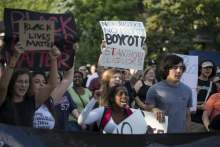
Whether or not a boycott is effective at damaging sales enough to force a change of heart of a business, it can be a great way of telling a story about just how damaging company behaviour can be.

By linking stories to brands that ordinary people have in their kitchen cupboards, it can make stories less abstract and more personal, and give people a sense of agency at the same time.

Boycotts can also introduce into people's minds, sometimes for the first time, the realisation that companies do not always have our best interests at heart. Given that the issue of corporate power is not on the curriculum of formal studies that young people will learn in school, for some this can lead to becoming involved in political campaigning as well as in consumer actions for the first time.

Boycotts can range from simple expressions of local outrage to complex international collaborations involving local authorities, churches, trades unions and environmental groups.

Below we outline three different types of boycotts.

(a) Spontaneous boycotts

2025 has been a year where we have seen, and reported on, a flowering of spontaneous boycotts in response to the political situation in the USA and the role that companies are playing. The crashing sales of Tesla in Europe are the most obvious example, but there has been a wider reaction against US brands in many other places.

(b) Organised boycotts 

There are many of these, and we formally track and list these boycotts on our website, but we have picked out just three below.

1. In 2025, we have been writing about a boycott call by more than 90 West Papuan tribes of companies involved in the world's biggest palm oil plantation there. Linking the boycott call to brands like Oreo, Ritz, Nestle, and Pantene has allowed them to tell the story of the ongoing ecocide in the world’s third-largest rainforest.

2. Our own Amazon boycott, now in its 13th year, is designed to draw attention on an ongoing basis to the extent of the company's systematic tax avoidance in the UK particularly. It is an important counter-narrative to the claims, of what is now one of the biggest businesses in the UK, to be a friend of the consumer.

3. The boycott of Twitter/X began as a spontaneous reaction to its political shift to the right, but is now organised by a coalition of more than 60 groups. Along with the loss of advertisers that has accompanied this, it has had very measurable economic impact.

(c) Name and shame campaigns

Many campaigns now, rather than explicitly calling for a boycott, will issue reports 'naming and shaming' brands for a particular activity (such as banks financing new oil projects). These can play the same educative role as boycotts and create doubt in people minds about buying from these companies again. At the time of writing, it is also interesting to note how the use of these name and shame campaigns are beginning to directly examine corporate support for far right parties.

Buying from organisations that put something back

All these calls to boycott help draw attention to the damaging decisions that companies and their owners/investors are taking. 

This can lead people to ask the question: 

Who should I buy from instead? 

Providing an answer to this question has been Ethical Consumer's main function for the last 30 years.

(a) Ethical shopping guides

Our shopping guides to over 100 different products and services, from batteries and banks to TV streaming and washing machines, rate companies on a range of ethical issues to help you find the ones who are more aligned to your ethics. 

Company ethos has long been part of the research methodology which Ethical Consumer uses to rank companies against each other on ethics. We introduced an updated assessment process in 2023 which allows for more detailed approach to company ethos. The scoring approach is summarised in the table below.

Company ethos category scoring system
Ethical Consumer Company Ethos Scoresheet (simplified) Score
Structure and purpose
Co-op or Mutual 40
Not-for-profit or charity structure 40
Registered social enterprise 20
B Corp 20
Part employee owned (over 10%) 20
Core to the business to provide a social or environmental alternative 30
Directors' pay and pay ratios
Director pay over £1m -10
Director pay over £10m -20
Living Wage certified 10
Positive policy towards pay ratios 20
Controversial sectors
Involved in arms or military supply -10
Involved in extraction (mining, fossil fuels) -10
Involved in nuclear power or weapons -10
Lobby groups
Member of free-trade lobby groups  -10
Boycotts
Boycott of whole company -20
Boycott of part of company -10

Anyone using the scores in our shopping guides to help inform their purchasing decisions, will therefore be tending to prefer companies which are constituted and managed in measurably different ways.

This company ethos assessment is not the sole factor on what makes an ethical company; it sits alongside the other core ratings in our shopping guides: climate, tax, workers and, where appropriate, animals.

(b) Social marketing and social labels

Socially-minded enterprises can also choose to talk about their alternative approach to business in their sales messages to consumers. Sometimes this can be spontaneous and independent.

At other times it can be part of collective social labelling schemes. The most well known of these might be the B Corp and co-operatives labels, but many others exist. In 2025 the OECD identified 16 government sponsored social labelling schemes across Europe - from Latvia to Spain - as well as six private labels too.

(c) Choosing social economy organisations in supply chains

Companies of all types have also developed ways of using their own supply chains or buying power to help build the social economy.

The most established approach is 'principle six' of the seven co-operative principles. In short, this means that cooperatives undertake to "co-operate, work with and support other co-ops". In practice, as well as collaborating politically, it means that co-ops are meant to try to include other co-operatives in their supply chains. This is one reason you might be able to spot the products of Suma (a workers' co-op) on the shelves of Co-op supermarkets (a consumer co-op).

The B Corp movement doesn't appear to have a formal principle of this type but in practice - through its directories which comprise many business service companies - it is clearly encouraged.

(d) Public bodies buying from social economy organisations

Governments and other public purchasers who want to prefer social enterprises for example in their supply chains have struggled with inflexible European 'procurement' laws in the past. Rules were formally changed in 2014, and new positive approaches have been proliferating since then.

In the UK, where we have the excellent Social Enterprise Network (SEN) lobbying for change, there were new rules introduced in 2012 (and 2023) specifically allowing and later requiring public buyers to consider 'social value'. As well as providing services to public purchasers wanting to do more of this, SEN also works with big companies as part of its 'buy social corporate challenge'.

SEN claims that, since 2016, "corporate partners have spent £656 million with 2,100 social enterprise suppliers, creating nearly 6,000 jobs" as part of this project.

Although our Challenging Corporate Power project is about encouraging a more fundamental rethink about the nature of businesses itself, it is interesting to observe how supportive many governments can be of some of the less controversial elements like this.


Part of a system change

Building a bigger alternative social economy through focussing on the purchasing power of consumers and others is a key step towards the vision for the future we have. 

Boycotts also have played an important educative role on the abuse of corporate power too. It is an area where Ethical Consumer, with our particular expertise, can hopefully make a unique contribution in what is a bigger picture of system change.
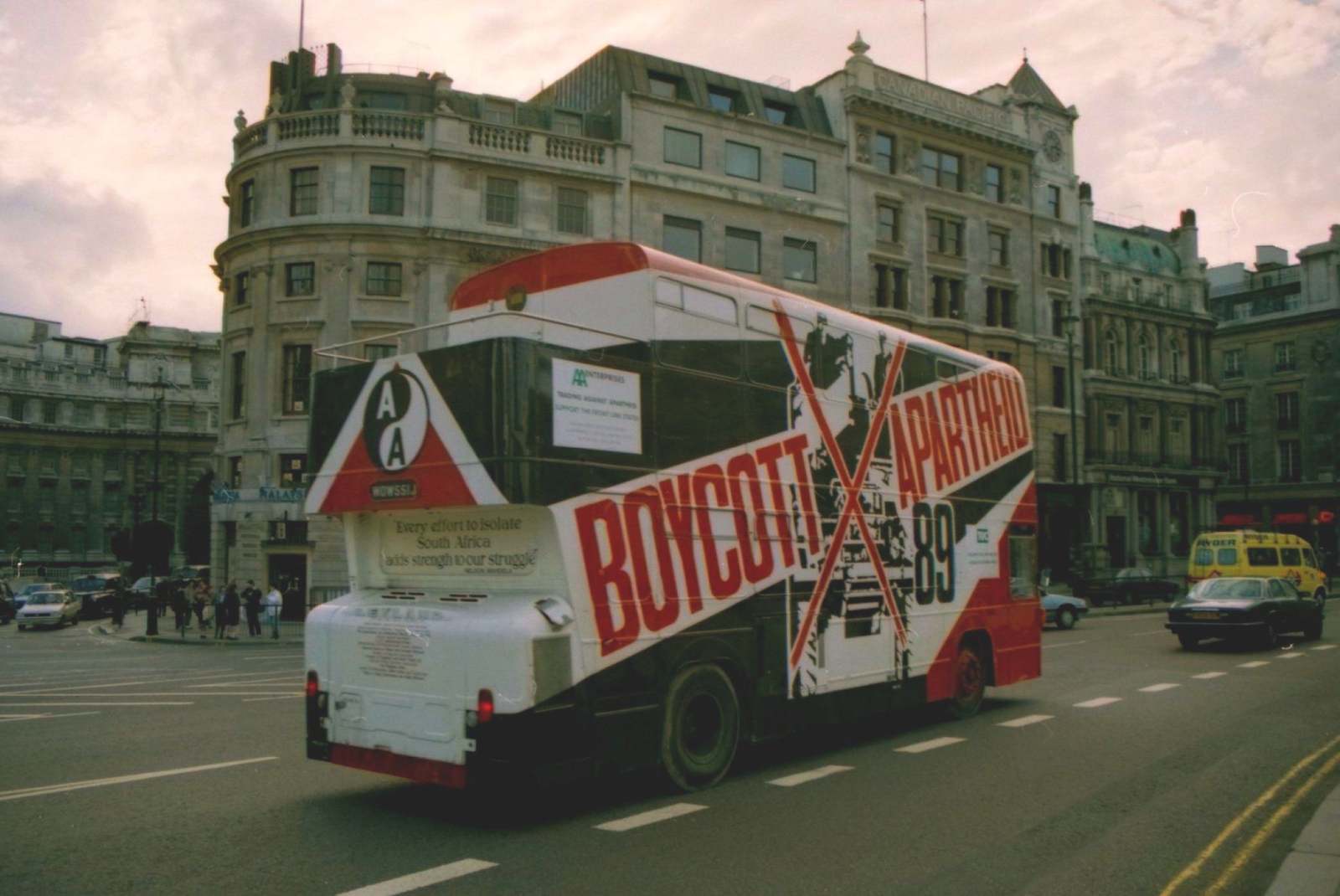


(More detail about the effectiveness and success of boycotts appears in the Handbook of Ethical Purchasing.)