

Find natural and cruelty free soap. Eco friendly and sustainability ratings for 61 brands of soap bars, liquid hand wash and shower gel, with recommended buys and what to avoid.
In this guide to ethical soap, we look at the ethics of soap companies, from the big brands like Dove, Palmolive, Pears and Simple to high street shops like Boots and Superdrug, as well as smaller eco brands.
Read more
In this article we look at what animal products are commonly used in cosmetics and toiletries, the issues around these and how to find vegan products.
Which cosmetics use animal products?
Many cosmetics and toiletries use animal products. For example, skincare and shower gel commonly include ingredients like milk. Make-up can include a range of different animal-based ingredients to add shine or change the texture.
Some of the worst offenders are perfumes and aftershaves. Companies do not have to put a full list of ingredients on their bottles, due to laws protecting fragrance recipes. This means that for expensive perfumes the catch-all word ‘fragrance’ in a list of ingredients could include musk from civets (cat-like animals) that have been industrially farmed, or beavers that are killed during harvesting.
Which animal products are used in cosmetics?
The list of animal products used in cosmetics and toiletries is astonishingly long.
While many, such as milk or honey, are common food ingredients, others such as shellac and musk you may never have come across. It’s therefore worth knowing common animal ingredients to look out for. We list some of the main ones below.
Animal ingredients to look out for in cosmetics:
- Ambergris is an ingredient only used in very expensive fragrances and most perfume uses synthetic alternatives. Known as “floating gold”, it is produced from the bowels of by sperm whales and then collected from the sea or beaches..
- Beeswax and honey are used in shower gel, shampoo, skincare and make-up. Royal jelly from bees is also used in cosmetics and toiletries. (Watch out for beeswax also being listed as 'cera alba' instead.)
- Carmine / cochineal is used as red colouring in make-up and products like shampoo and shower gel. The red pigment is from the crushed female cochineal insect. It is also often listed in beauty products using other names, including Cochineal Extract, Crimson Lake, Natural Red 4, C.I. 75470, and E120
- Castoreum is a scent produced by beavers, which is supposed to smell like vanilla. The beavers have to be killed in order to harvest the substance and it has mostly been replaced with synthetic versions.
- Collagen is a protein found in human and animal bodies, as well as some plants. It has been hyped up for skin care because it is supposed to give you "firmer, plumper, more youthful looking skin". While collagen can be vegan if produced from bacteria and yeast, it is more often from animal sources such as beef or fish.
- Civet musk or civet oil are scents produced by civets, an animal similar to a cat that lives in Africa and Asia. Although civets do not need to be killed to collect the musk, they are often farmed in poor conditions with high mortality rates which mean that farmers “restock” with wild-caught civets. It can be used in fragrances and perfumes, and increasingly in the coffee and luxury meat trade.
- Guanine is sometimes used in make-up to give a sparkly or glittery effect. It comes from the scales of fishes.
- Gelatine is used as a thickener and can be found in various toiletries and cosmetics. It's made by boiling up animal bones, tendons and ligaments in water.
- Lanolin is a naturally occurring fat in sheep’s wool. It can be used in make-up, shower gel, and skincare products, also under the names wool wax, wool fat, or Adeps Lanae.
- Milk (and related products like lactose and whey) is used in shower gels, soap, skincare and perfumes.
- Shellac is a resin secreted by beetles, and mostly harvested in India and Thailand. It is used in nail varnish and hairspray to add shine and is used to bind mascara. It can also be found in skincare and perfumes and fragrances. The beetles are routinely killed when they get caught in the harvesting process. Some companies have now made a vegan version, which can confusingly also be called shellac.
- Snail mucin (think – snail slime) is sometimes used in skincare and favoured particularly in moisturisers. The industry of collecting it is completely unregulated. Some estimates say that the snail slime market is worth over £1bn, with millions of animals used annually.
- Squalene is extracted from the livers of sharks and can be used in deodorant and moisturiser. Over 60 species of shark are fished for their liver oil with around 70% being sold to the cosmetics industry. Vegan versions are made from wheat germ and olives.
- Tallow is found particularly in soap, shampoo and lipstick. It is processed fat mainly from cows and sheep.
You may also find that some products state they use 'natural' bristles for shaving brushes or makeup brushes. Natural may mean from goats, horses or other animals.
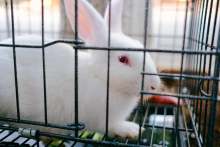
Animal testing is also very common in the cosmetics industry. Even though animal testing is unreliable when it comes to the safety of products that will be used by humans, almost all ingredients have been tested on animals at one point or another – even water.